Major donations and thousands of donors propel UdeM past $1 billion

Less than three years after its official launch, Université de Montréal’s 'Brave the Way' fundraising campaign has achieved its objective: $1 billion. It's the largest sum ever amassed by a French-language university, anywhere in the world.
“This success shatters the myth that Quebec francophones don’t give to philanthropic causes,” said Claude Bernard, executive director of strategy and operations in UdeM's Office of the Vice-Rector of Philanthropy and Alumni Engagement.
Even before they went public with the campaign, the fundraising team secured a $40-million donation from Quebecor and the Fondation Chopin-Péladeau. That gift set the tone. A few months later, the Courtois Foundation followed with a $159-million gift.
Michael Pecho, UdeM's vice-rector of philanthropy and alumni engagement, saw the momentum those major gifts generated. “With so many worthwhile causes competing for support, they were seen as a vote of confidence and had a strong leverage effect,” he recalled. “Donations attract donations.”
To date, nearly 47,000 people have donated to the campaign, 31,000 of them alumni. The vast majority of gifts were under $1,000, and more than half came from people making their first-ever donation to UdeM.
Reconnecting with alumni
The dollars didn’t just fall from the sky—far from it.
Fundraising at UdeM has become more professional. First, analyses were made of other universities that excel at fundraising, to see what they were doing right. Then, influential volunteers were recruited as campaign co-chairs and ambassadors.
The support of alumni was also deemed indispensable to reaching the billion-dollar goal.
“UdeM has the second-largest number of alumni in Canada, after the University of Toronto,” Pecho said. “At other research universities, alumni account for the largest share of philanthropic revenue. At UdeM, they ranked third, behind corporations and foundations.”
With the full support of the administration, a team with complementary skills was assembled to work towards the common goal.
Pecho vividly remembers hitting the road to meet alumni and donors in Europe and set up a fundraising committee there. When he presented the campaign’s lofty goal, the response was enthusiastic.
“One of the reasons these people jumped on board was the ambition,” Pecho said. “They’d say: ‘Finally, my alma mater is aiming high.’”
UdeM has roughly 450,000 alumni, 50,000 of whom live outside Quebec. “Many of them hadn’t been in contact with UdeM since they graduated,” Bernard said. “Yet their time at UdeM was a key factor in their success. We rekindled their school spirit. Very quickly, they wanted to join the collective effort to support excellence.”


Mobilizing the research community
UdeM researchers were enlisted to talk about their work, an important element in encouraging donors to give.
“At their first meetings with the deans, some researchers saw philanthropy as a nuisance,” Pecho recalled. “Dedicating a few hours a week to meetings, many of which would come to nothing, was something new for them. Once they had their first success, though, they caught the bug. Now they see philanthropy as a lever.”
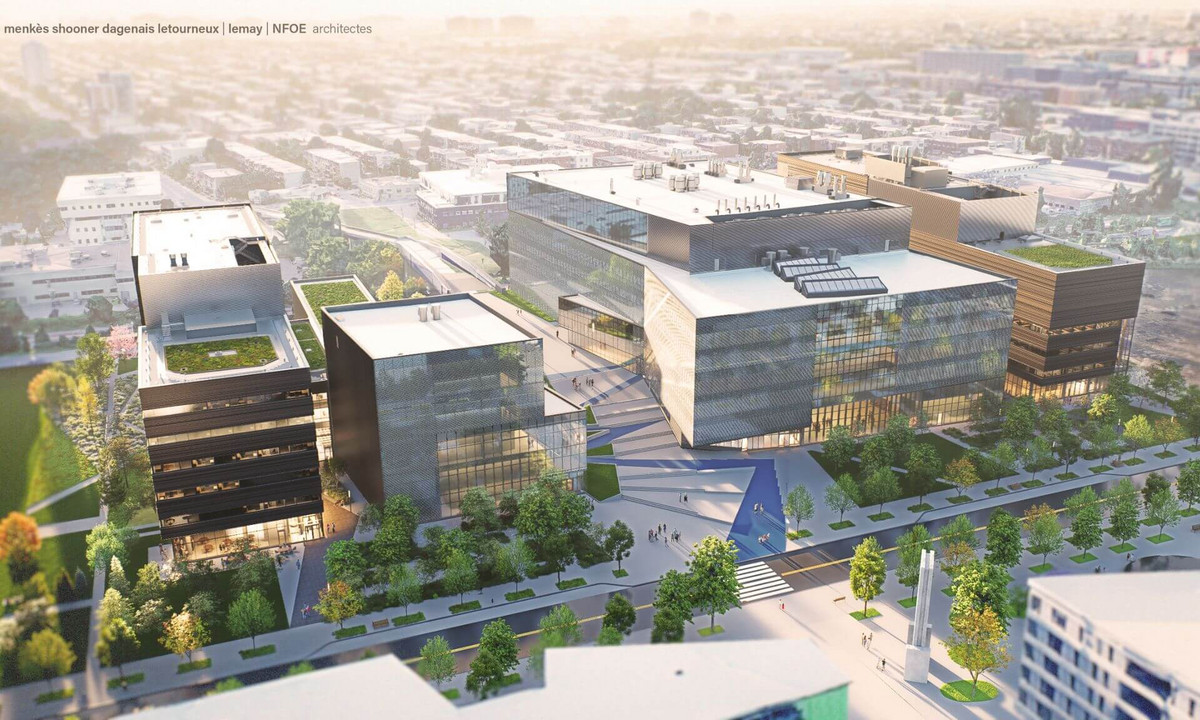
The leverage effect is very real. The donation to build the Institut Courtois, which specializes in research on new materials, helped secure public funding for the second phase of the MIL campus. The funds raised by the campaign were also used to create or support 71 research chairs and establish numerous student scholarships.
“UdeM ranks among the world’s top universities and second in Canada for research, but when it came to scholarships, we were at the back of the pack,” Pecho said. “Since the campaign began, we’ve raised nearly $88 million for scholarships, including some for students who are the first in their families to attend university.”
Benefits for society as a whole
The money raised is also being used to fund projects with a strong human focus in the community. One is UdeM's network of affiliated schools, the academic equivalent of university hospitals. By hosting student interns and residents, providing continuing education for teachers and conducting needs-based research, the project aims to promote academic success and equal opportunity in under-served neighbourhoods.
“It’s an extraordinary story because we know it will have a real impact,” Bernard said.
The initiative was made possible by a $5-million donation from the Fondation Famille Michel Fournelle. UdeM chancellor Frantz Saintellemy and his wife, Vickie Joseph, chipped in $1 million of their own and urged the business community to follow suit.
“They rose to the challenge,” Pecho said. “It’s a wonderful initiative that touches on the university’s three missions: teaching, research and community service.”
The effort continues
Beyond the billion dollars raised, Brave the Way aims to log 200,000 meaningful acts, including volunteer work. “We’re very hopeful about reaching that goal,” Bernard said. “The community has really gotten behind this campaign.”
A good deal of effort is going into keeping donors informed of the achievements. “It’s our duty,” Bernard said. “And it encourages people who placed their trust in us with a first donation to give again.”
This shift in attitude will also benefit others.
“We’ve clearly seen that Quebecers are prepared to give generously, and we believe this success will have a ripple effect on the entire philanthropic sector,” Pecho said.
“It can become a tide that lifts all boats. And the efforts continue for Brave the Way. We can accomplish so many great things with the funds raised—and those yet to come.”