Maple syrup for cyclists? Sure, but how much?

In 5 seconds An UdeM prof is testing three doses of maple syrup, mixed with water, on elite cyclists to measure carbohydrate oxidation and its potential effect on time-trial performance.
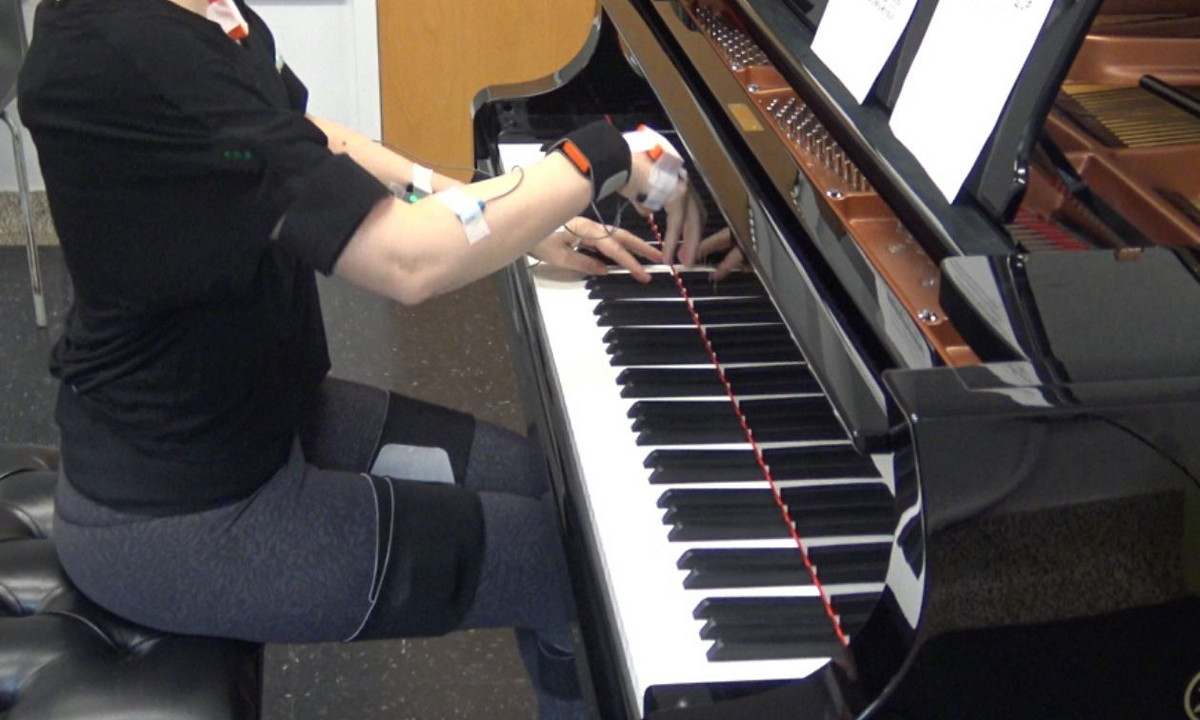
A former national team triathlete, doctoral student Jérémy Briand was the first participant in a research project designed to determine what dose of a maple syrup-based drink can be tolerated while delivering optimal performance on a bicycle.

Could maple syrup give elite cyclists a competitive edge? The question is timely. For many years, the recommended carbohydrate intake during exercise was around 60 grams per hour, but recently the recommendation has been nearly doubled for some elite athletes.

With the UCI Road World Championships descending on Montreal from September 20 to 27, professor Jonathan Tremblay of Université de Montréal's School of Kinesiology and Physical Activity Sciences is leading a research project to shed light on the issue. 

Maple syrup differs from other natural sugars in its composition. “It’s mainly composed of sucrose, a disaccharide made up of one glucose molecule and one fructose molecule, with small amounts of free glucose and fructose,” explained Tremblay.

Once sucrose is hydrolyzed, the glucose and fructose largely follow separate absorption pathways in the intestines. This combination is better absorbed than glucose alone (or other monosaccharides), which can saturate the transporter and cause discomfort at high doses.

The benefits of combining two types of sugars absorbed through distinct pathways are well-documented in the scientific literature on sports nutrition. “It increases carbohydrate availability to the muscles, which gives them more fuel—they can work harder and perform better,” said Tremblay.

However, maple syrup specifically has not been studied. Tremblay’s project aims to determine the extent to which maple syrup delivers the benefits of sucrose, and up to what dose.

Tracking carbohydrates during exercise

During prolonged exertion, muscles draw simultaneously on their glycogen stores and on circulating glucose. The liver helps maintain blood glucose levels by releasing glucose from its own glycogen stores early on, and then ramping up gluconeogenesis as the exertion continues. The balance between these sources shifts over the course of the effort.

“Exogenous sources, such as maple syrup, inhibit the release of glucose by the liver, allowing it to conserve its reserves,” Tremblay noted.

Carbohydrates consumed during exercise therefore go directly to fuelling working muscles, which draw on circulating glucose, particularly as their internal reserves become depleted with the duration or intensity of the effort.

This is the basis for the longstanding sports nutrition recommendation of approximately 60 grams of carbohydrates per hour for most trained athletes.

But the bar is being raised. “Several international sports federations, including the Union Cycliste Internationale (UCI), now recommend 90 to 120 grams per hour during high-level competitions,” said Tremblay. “That amount is generally well-tolerated by athletes who are accustomed to consuming carbs during training.”

Top cyclists are on board

Tremblay is conducting the study at the Montreal Heart Institute’s EPIC Centre with 32 elite cyclists recruited through the Fédération des sports cyclistes du Québec.

Each participant cycles for two hours on a stationary bike and then completes four 20-kilometre time trials, once with only sweetened water and three times with diluted maple syrup at doses of 60, 90 and 120 grams of carbohydrates per hour.

A carbon-13 isotope tracer—a stable, completely safe isotope naturally abundant in the atmosphere—is used to estimate the amount of the carbohydrates from the syrup that are actually burned. By measuring exhaled 13CO₂, the research team can distinguish between oxidation of the exogenous carbohydrates from the syrup and oxidation of the body’s own reserves.

In 2018, the laboratory conducted a cross-sectional analysis comparing different carbohydrate sources, including maple syrup, ingested at a rate of 60 g per hour. No difference was found in time-trial performance, but the subjects were recreational athletes with wide variability in responses. For their current project, Tremblay’s team has recruited higher-calibre cyclists using a randomized controlled design to minimize intra-individual variability.

How far does the correlation go? 

The research team expects to find correlations between the amount of maple syrup ingested, the oxidation of the sugar from the maple syrup, and time-trial performance, but it remains to be seen whether this relationship plateaus at a certain dose. Digestive tolerance could complicate the picture at higher doses.

This question ties into the broader debate in the literature: while the benefits of carbohydrate intake during exercise are well-established up to about 90 grams per hour, evidence for higher doses is mixed. Some recent studies have found no clear added benefit beyond this threshold.

Participants’ dietary habits could also influence the results: Tremblay suspects that cyclists who typically consume less than the currently recommended carbohydrate levels may struggle to ingest large amounts during the experimental sessions.

The project, funded in part by Producteurs et productrices acéricoles du Québec, the Natural Sciences and Engineering Research Council of Canada and Mitacs, will continue over the coming months.

A first participant explains his involvement

Jérémy Briand, a doctoral student in the School of Kinesiology supervised by Tremblay, is one of the 32 elite cyclists in the study, and the first to complete the full protocol. Briand was a member of the national triathlon team until a back injury in 2023 led him to rethink his athletic trajectory, but he hasn’t stopped training.

“I’d been familiar with the protocol for over a year, and it took a high-level athlete to validate the tools and data before recruiting the 32 participants,” he explained. Along with fellow students Philippe Parent and Elizabeth Ferry, who are coordinating the project, he completed the study’s six sessions. The research team made adjustments to the protocol based on their results.

Those six sessions are divided into several stages. The first is a glucose tolerance test to rule out diabetes and prediabetes. The next measures the participant’s maximum oxygen consumption (VO2 max)—a metric that will be used to calibrate exercise intensity—and also familiarizes the participant with the stationary bike. Four weekly sessions follow: two hours of cycling at 65 per cent of VO2 max, each with a different, randomized dose of maple drink, followed by a 20-kilometre time trial at maximum effort.

Media requests

Université de Montréal
Phone: 514-343-6111, ext. 75930