Captured the attention

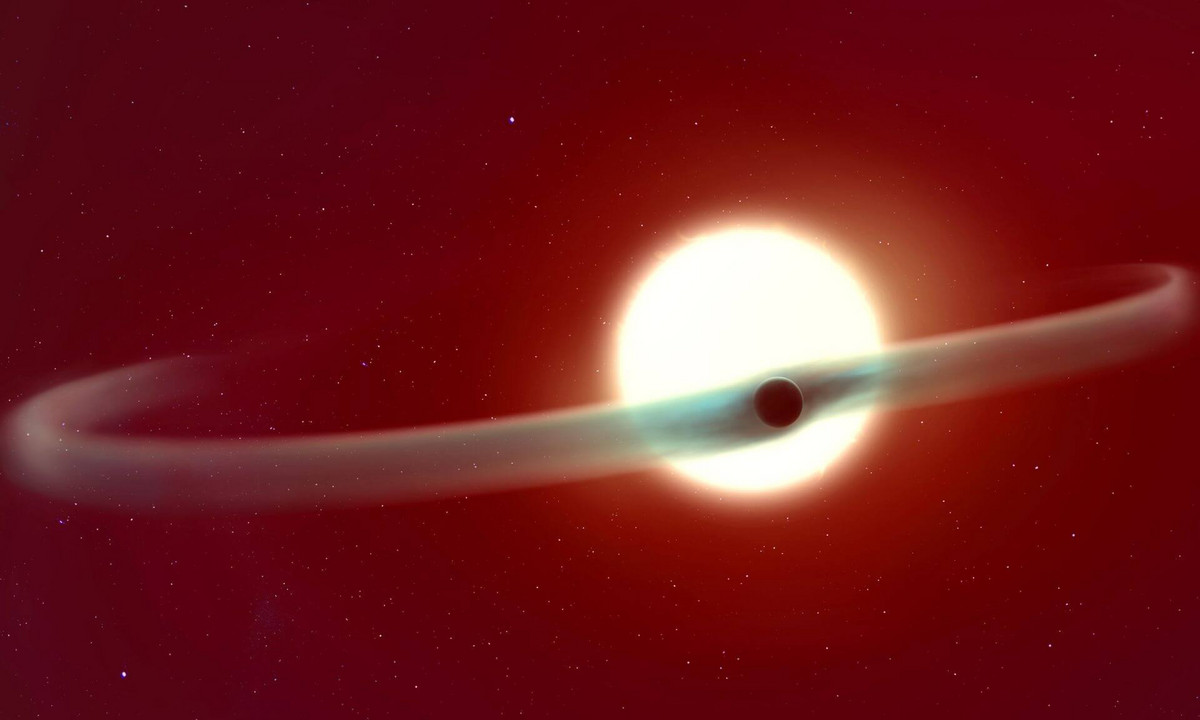
TRAPPIST-1, a star much smaller and cooler than our sun located approximately 40 light-years away from Earth, has captured the attention of scientists and space enthusiasts alike since the discovery of its seven Earth-sized exoplanets seven years ago. These worlds, tightly packed around their star with three of them within its habitable zone, have fueled hopes of finding potentially habitable environments beyond our solar system.
Led by iREx doctoral student Olivia Lim, the researchers employed the powerful James Webb Space Telescope (JWST) to observe TRAPPIST-1 b. Their observations were collected as part of the largest Canadian-led General Observers (GO) program during the JWST’s first year of operations. (This program also included observations of three other planets in the system, TRAPPIST-1 c, g and h.) TRAPPIST-1 b was observed during two transits — the moment when the planet passes in front of its star — using the Canadian-made NIRISS instrument aboard the JWST.
“These are the very first spectroscopic observations of any TRAPPIST-1 planet obtained by the JWST, and we’ve been waiting for them for years" said Lim, the GO program's principal Investigator.
She and her colleagues used the technique of transmission spectroscopy to peer deeper into the distant world. By analysing the central star’s light after it has passed through the exoplanet’s atmosphere during a transit, astronomers can see the unique fingerprint left behind by the molecules and atoms found within that atmosphere.