An exoplanet in the 'Goldilocks' Zone'
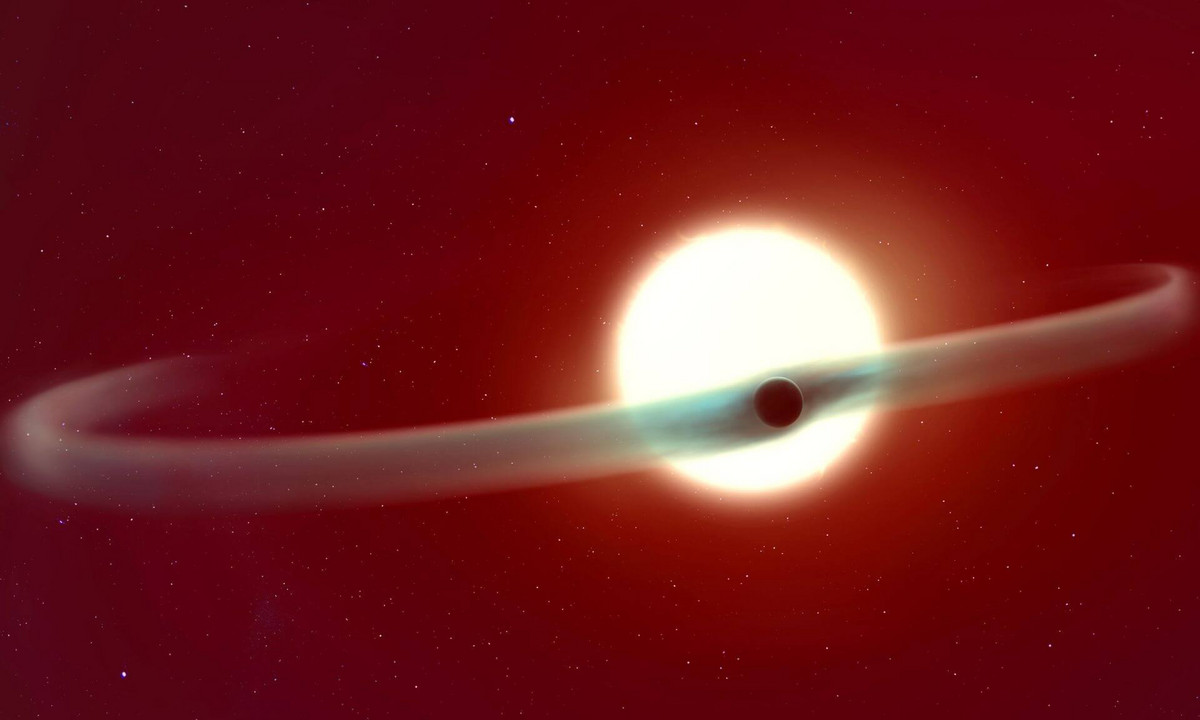
LHS 1140 b, an exoplanet orbiting a low-mass red dwarf star roughly one-fifth the size of the Sun, has captivated scientists due to it being one of the closest exoplanets to our Solar System that lies within its star’s habitable zone. Exoplanets found in this “Goldilocks’ Zone” have temperatures that would allow water to exist on them in liquid form — liquid water being a crucial element for life as we know it on Earth.
Earlier this year, researchers led by Charles Cadieux, a Ph.D. student at UdeM's Trottier Institute for Research on Exoplanets (iREx) supervised by professor René Doyon, reported new mass and radius estimates for LHS 1140 b with exceptional accuracy, comparable to those of the well-known TRAPPIST-1 planets: 1.7 times the size of Earth and 5.6 times its mass.
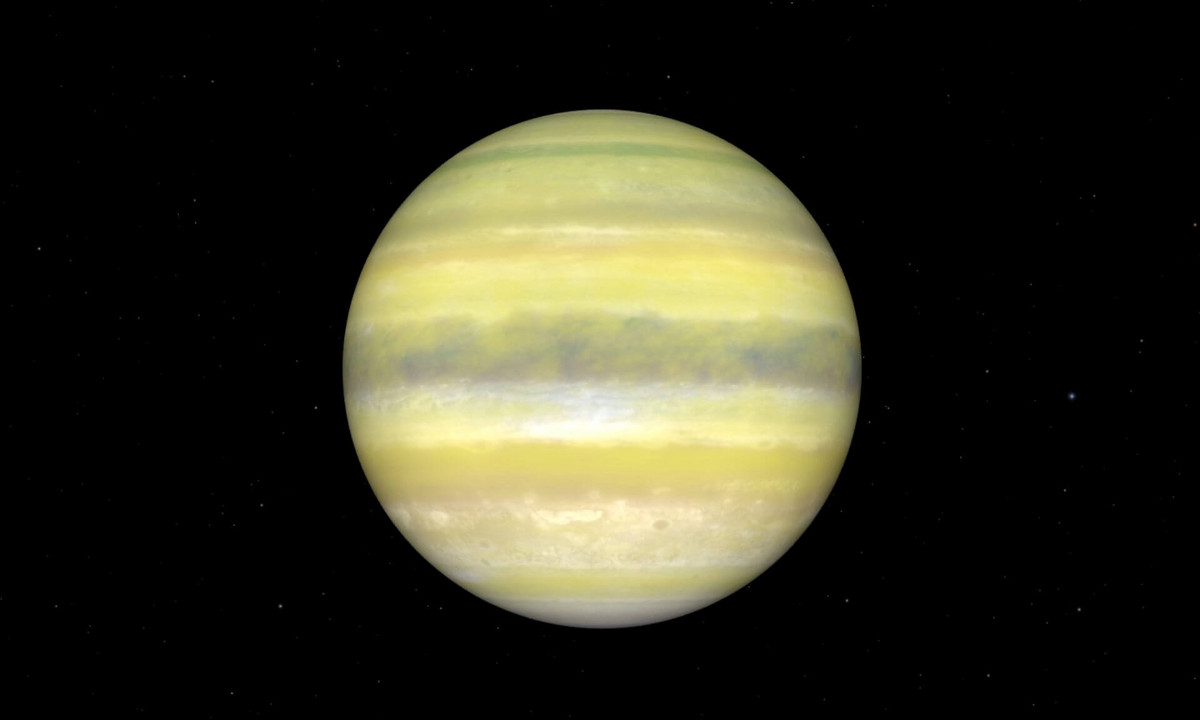
One of the critical questions about LHS 1140 b was whether it is a mini-Neptune type exoplanet (a small gas giant with a thick hydrogen-rich atmosphere) or a super-Earth (a rocky planet larger than Earth). This latter scenario included the possibility of a so-called “Hycean world” with a global liquid ocean enveloped by a hydrogen-rich atmosphere which would exhibit a distinct atmospheric signal that could be observed using the powerful Webb Telescope.