The right dose

“It’s all a question of dosage,” Gratton explained. “If there are too many of these granules or they are active for too long, they no longer protect the integrity of the blood vessel cells but instead generate pathological blood vessels.” You have to fight cellular stress but don’t throw the baby out with the bathwater!
“With the right amount of stress granules, healthy cells are better equipped to withstand attack,” said Gratton. “Until recently, we didn’t know that cellular stress was involved in blood vessel formation.” This discovery opens the way to new treatments for vascular pathologies targeting these molecular interactions.
“Our research holds promise for the treatment of cancer, where we want to reduce blood supply to the tumor, and also for the treatment of diabetic retinopathy, which is caused when small, abnormal blood vessels form in the retina and obstruct vision,” Gratton said. “Blocking these vessels impedes the development of lesions.”
Gratton remains cautious. He believes a better understanding of the mechanisms governing angiogenesis will be essential for identifying new therapeutic targets.
Over the past two decades, research into drugs that deprive cancer cells of blood, oxygen and nutrients instead of attacking them has intensified. The current strategy is to block the action of vascular endothelial growth factor (VEGF), the main factor responsible for blood vessel formation, which is involved in the growth of cancerous tumors.
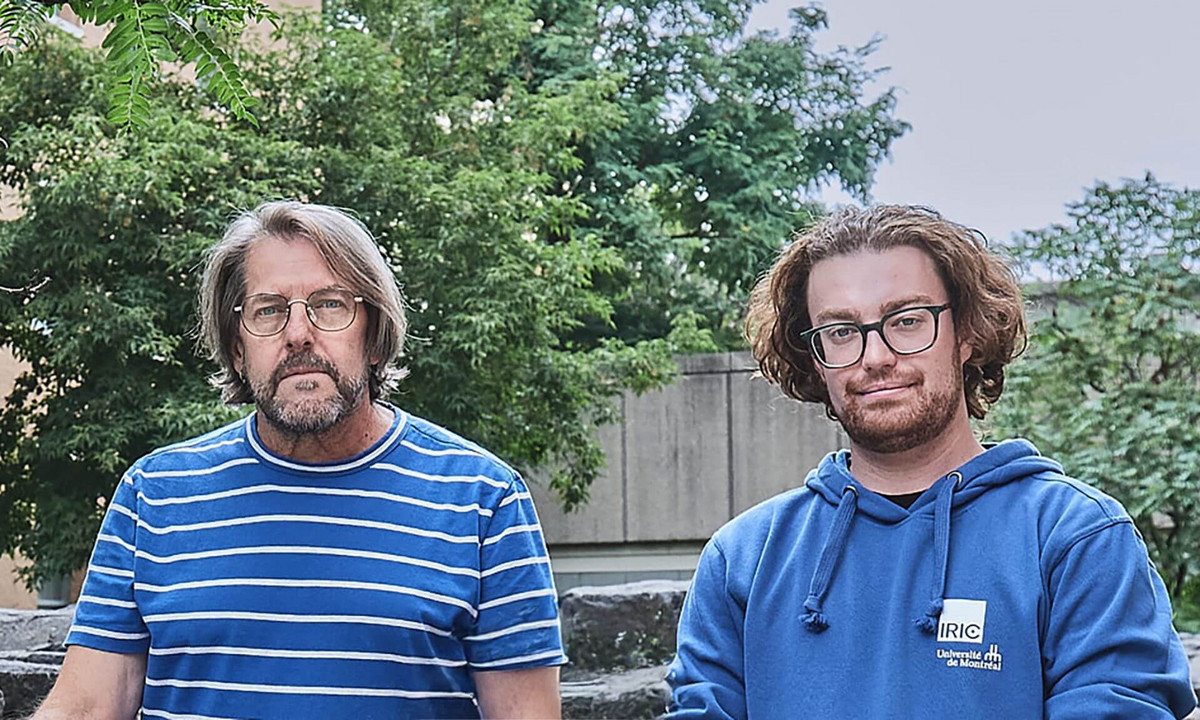
Gratton has held the Merck Canada Chair in Pharmacology since 2013 and heads the Endothelial Cell Biology and Angiogenesis Laboratory at the Centre for Biomedical Innovation in the Faculty of Medicine on UdeM’s main campus.
The research team behind the study published in Nature Communications on May 23 includes Yassine El Bakkouri, Rony Chidiac, Vanda Gaonac’h-Lovejoy, Chantal Delisle and Jeanne Corriveau from Université de Montréal, Gaël Cagnone, Jean-Sébastien Joyal and Alexandre Dubrac from the CHU Ste-Justine Research Centre, Laura Hulea from the Hôpital Maisonneuve-Rosemont Research Centre, and Ashley Chin and Éric Lécuyer from the IRCM.
In Gratton’s office at the Faculty of Medicine, a yellowed page from La Presse has pride of place: in 2003, he was named Person of the Week.
“I’ve had my 15 minutes of fame,” he said with a smile. His first but not the last!