Asymmetry on the dayside

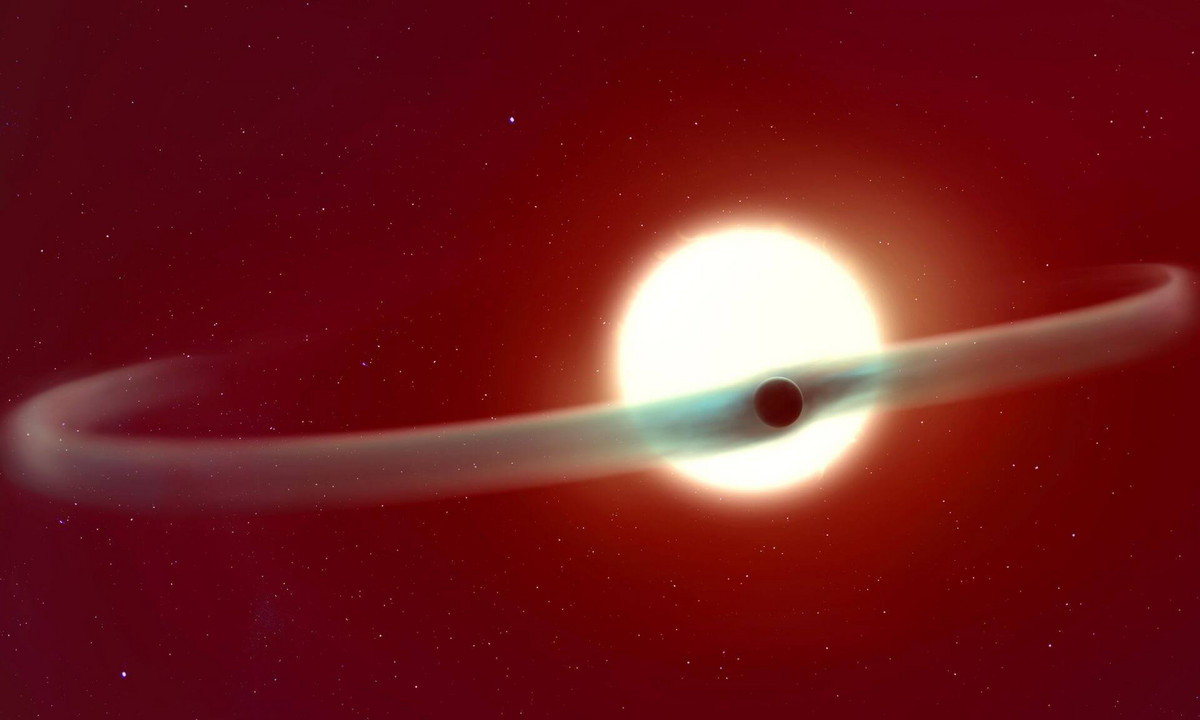
Using the James Webb Space Telescope (JWST), his team uncovered an asymmetry in the planet’s dayside reflectivity. The scientists propose that the uneven distribution of heat and clouds is driven by powerful eastward winds that transport heat around the planet.
These findings help refine models describing how heat is transported across a planet and cloud formation in exoplanet atmospheres, thereby also helping bridge the gap between theory and observation.
The research team studied the atmosphere in detail by analyzing both the heat emitted by the planet and the light it reflects from its star. To create a clearer picture, they observed the planet at multiple positions in its orbit and analysed its properties at each phase individually.
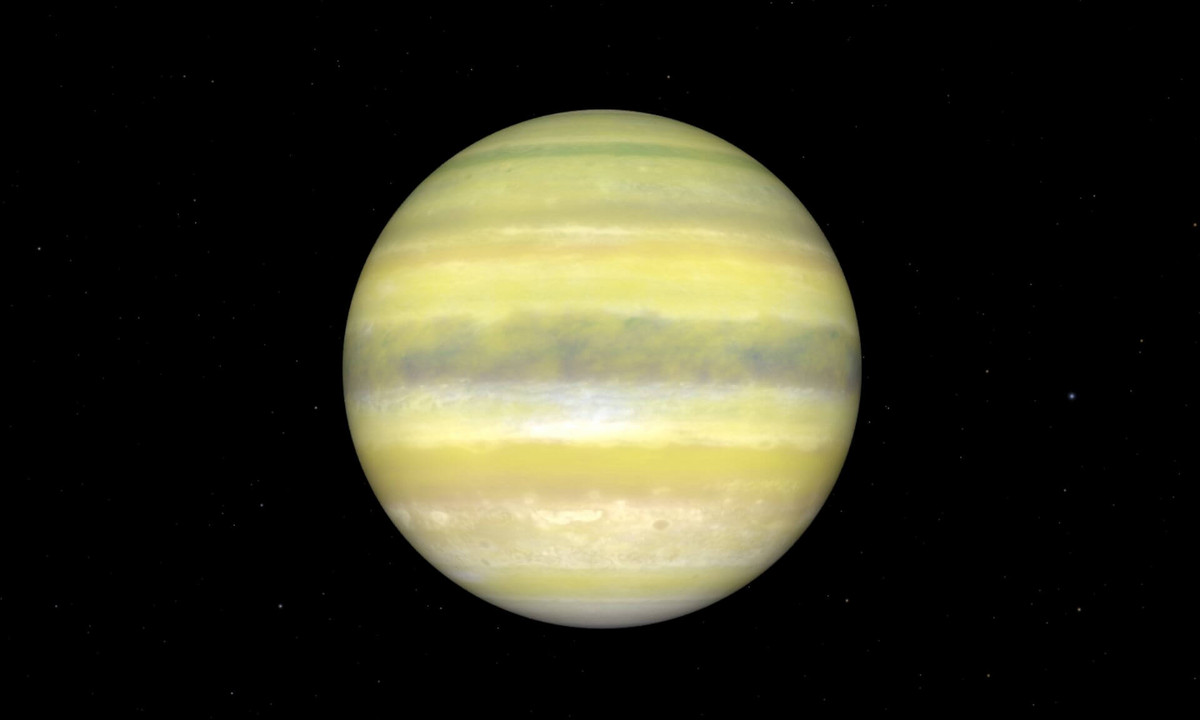
They discovered clouds made of materials like silicate minerals, which form in an arch-like shape on the slightly cooler western side of the planet’s dayside. These reflective clouds help explain why this planet is so bright at visible wavelengths, bouncing back much of the star’s light.
By combining this reflected light with heat emissions, the team was able to create a detailed model of the planet’s atmosphere. Their findings reveal a delicate balance between intense heat from the star and the planet’s ability to redistribute energy.
The study also detected water vapour in the atmosphere, providing important clues about the planet's composition and the processes that govern its extreme environment.
"By modeling LTT 9779 b’s atmosphere in detail, we’re starting to unlock the processes driving its alien weather patterns," said Coulombe’s research advisor Björn Benneke, an UdeM physics professor and co-author of the study.