Canadian scientists have demonstrated for the first time that a non-invasive brain monitoring technique could help medical teams predict the future development of premature babies.
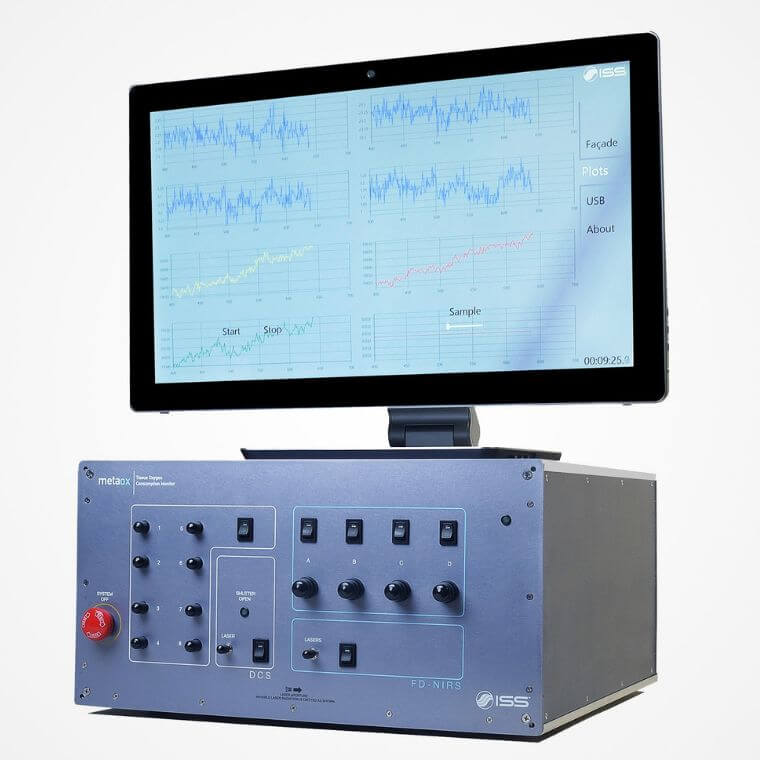
The technique combines two advanced optical technologies called FDNIRS and DCS to measure, without any pain or radiation, how well the baby's brain uses oxygen.
An optical sensor placed on the child's forehead provides two pieces of crucial information:
- cerebral blood flow and the amount of oxygen reaching the brain (availability);
- the amount of oxygen extracted and consumed by the brain (utilization).
In a study of 241 babies born between 29 and 36 weeks of pregnancy, scientists at Université de Montréal and its affiliated children's hospital Santé Québec – CHU Sainte-Justine used the sensor when the infants reached term-equivalent age (approximately 40 weeks).
They then waited two years and compared the data to the children's cognitive, language, and motor development, assessed using the Bayley-4 scales, a reference tool for measuring neurodevelopment in young children.
The key finding, published in January in Scientific Reports: the more efficiently a premature baby's brain uses oxygen, the better their subsequent development, measured by cognitive tests and language scores.
Among the babies studied, one in three showed developmental delays at age 2.
Less closely monitored
Unlike extremely premature infants (less than 29 weeks) who already receive systematic follow-up, those born between 29 and 36 weeks of pregnancy, despite representing the majority of premature births, are generally less closely monitored in Canada.
"Very premature infants have been extensively studied by scientists and are systematically followed by a pediatrician, while those born between 29 and 36 weeks have received less attention," said Santé Québec – CHU Sainte-Justine occupational therapist Marie-Noëlle Simard.
"We therefore know less about the consequences of these babies' prematurity on their development," added Simard, a professor at UdeM's School of Rehabilitation. "Most of these babies leave the hospital without further follow-up, as if they had been born at term."