To understand how athletes make decisions, sports science draws on several theoretical frameworks, said Romeas, who is also a performance scientist at the Institut national du sport du Québec specializing in the neuroscience of vision and sports psychology
Historically, the “information processing” model has strongly influenced research. From this angle, the athlete perceives a situation, selects relevant information, compares it to prior knowledge and experience, and then chooses and initiates an action.
The model works well to explain behaviours related to anticipation, pattern recognition and athletic expertise, but the sequential approach has limitations when applied to events that occur at very high speeds.
How can cyclists instinctively avoid an unexpected obstacle when they don’t have time to think consciously? The information-processing model acknowledges the existence of processes automated by expertise, but it struggles to explain unpredictable situations or those that are distant from previously experienced patterns.
Another way of looking at things is via “recognition-primed decision-making.” In this approach, experts quickly recognize familiar patterns: rather than comparing all possibilities, the athlete identifies a workable option and adjusts it on the fly, allowing for faster response.
“Ecological dynamics” is another influential approach in the sports world, Romeas said. Inspired in particular by the work of American psychologist James Gibson, it emphasizes the constant interplay between perception and action, rather than decision-making conceived as the result of sequential and complex brain processing.
“The cyclist, the bike and the environment influence one another,” Romeas explained. “The athlete perceives not only cues or obstacles, but also possibilities for action, or ‘affordances’: an opening, a trajectory, a space that is closing.
"These possibilities are constantly evolving and depend on the environment, speed, fatigue, the density of the peloton and the cyclist’s physical and motor abilities," he added, likening the phenomenon to the behaviour of flocks of birds or schools of fish.
“When one individual changes course, the others around him adapt instantly, creating a perfectly coordinated collective movement,” Romeas said. “In a peloton, similar mechanisms may be at work, each cyclist acting as both a sensor and a transmitter of information.”
Romeas does not consider these models mutually exclusive. They offer complementary perspectives for understanding how an expert can read a situation, anticipate developments and make a quick decision.
Yet another model, the “embodied” approach, holds that decision-making doesn’t happen solely in the brain but is also shaped by the body in action.
“Balance, posture, muscle tension and speed, as well as accumulated motor experiences, are sensorimotor factors that influence what the athlete perceives as possible and how they choose to act,” said Romeas.
“So cyclists don’t just decide and then act; they continuously adjust their decisions based on what they perceive and feel.”
An expert eye
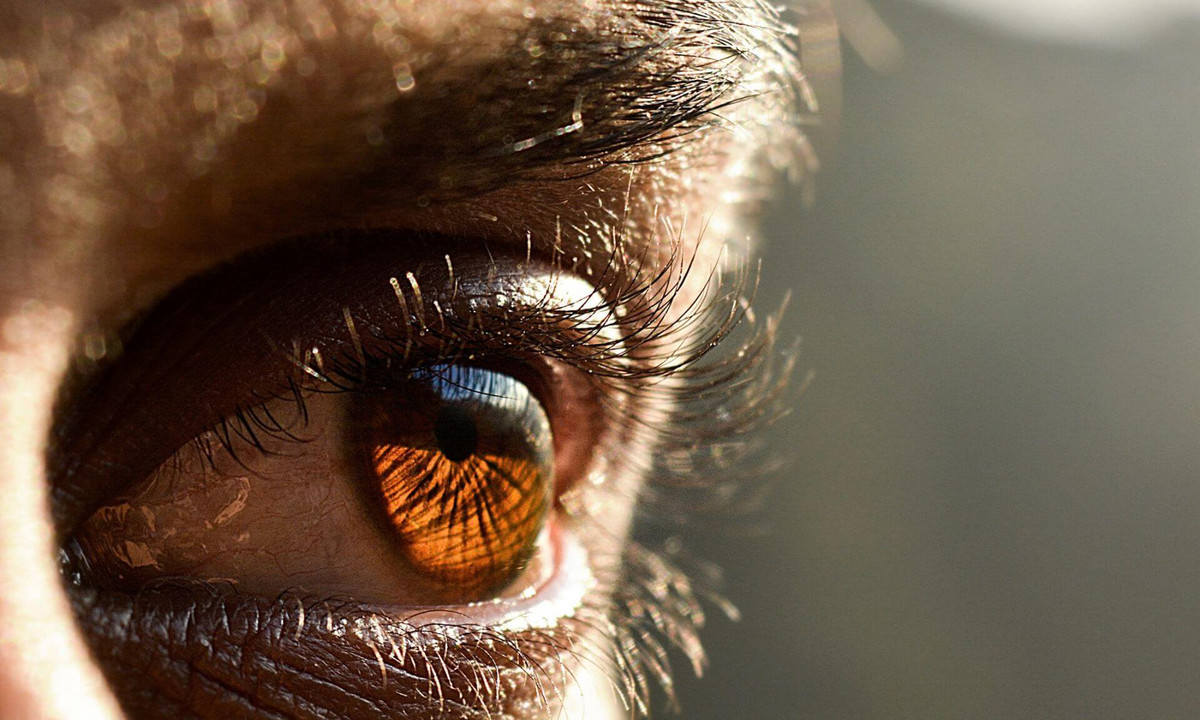
Although athletes rely on multiple senses to make decisions, vision remains a key gateway to understanding how they anticipate and guide their actions.
There are few studies on vision in professional cyclists, but Romeas points out that research in other disciplines has shown that elite athletes develop specific visual strategies.
“Unlike novices, they don’t constantly scan their surroundings for information,” said Romeas. “They know exactly where to look. Visual strategies are strongly linked to human expertise.”
Top athletes use both foveal vision (central vision) to capture precise information and peripheral vision to detect broader information, particularly rapid movements and changes in trajectory.
By focusing on visual anchor points, they maximize their peripheral vision, which is particularly effective for detecting rapid movements. This strategy allows them to gather vast amounts of information without overloading the brain.
In cycling, certain cues can be very telling: an opponent’s shoulder movements, pedaling rhythm, wheel positioning or subtle shifts within the peloton. These signals help the athlete anticipate changes in direction, accelerations or dangerous situations.
On descents, where optic flow accelerates and decisions must be made in a millisecond, elite athletes probably have the advantage of being able to look further ahead. This would allow them to anticipate trajectories and dangers, stabilize their movements and avoid being overwhelmed by rapid visual information from the road in front of them.
Better vision through training?
The question of training the brain to "see better" has fascinated Romeas for years. But at present, there does not seem to be any miracle training program for an already seasoned athlete.
Virtual reality, for example, is a promising avenue that complements conventional training. It can recreate race situations without exposing athletes to the same risks. However, Romeas notes, to translate this into improved performance, the technology would need to replicate perceptual and motor challenges specific to real-world conditions.
As for video games, the potential is dubious; they are not realistic enough to faithfully reproduce the perceptual-motor demands of an actual race. “For now, augmented training platforms like Zwift are useful mainly for developing or maintaining physiological skills rather than the perceptual-motor skills specific to cycling,” said Romeas.
While many companies offer tools designed to improve athletes’ visual and cognitive skills, what works best now is practicing the sport under conditions as close as possible to reality, with the same constraints, the same sources of information and the same motor reactions.
As Romeas put it, “to become better at making cycling decisions, you have to cycle.”
Embrace the unexpected
Another approach is currently gaining traction: constraint-based training. The idea is to place athletes in challenging or unpredictable situations to develop their ability to adapt. In the context of cycling, this involves more technical routes, sudden changes and unexpected challenges that increase cognitive load—anything that forces the athletes to quickly adjust their behaviour. “The goal is to develop athletes who are never—or almost never—surprised,” said Romeas.
“These more varied and cognitively demanding training sessions also have the advantage of being more stimulating in many cases. At the elite level, many athletes quit their sport because they lose the enjoyment that initially drew them to it. Introducing more diversity and unpredictability into training sessions could therefore also help maintain their motivation.”
The link between motivation, engagement and learning is well-documented. Engaged, stimulated and motivated athletes are generally more willing to learn and improve.
And in a sport such as cycling, where a pothole can appear without warning on a Montreal street, the ability to adapt can make all the difference.