Could AI be conscious?

In 5 seconds An UdeM researcher explores what consciousness really means—and whether it might one day emerge in a machine.
What can biology teach us about artificial consciousness?

Could a machine ever feel pain or pleasure? Could it have its own inner experience of the world? As artificial intelligence grows more fluent in conversation, reasoning and problem-solving, this question is migrating from science fiction to the lab. It is of particular interest to researchers probing the origins of consciousness.

A problem arises right from the start: we don’t know exactly why we are conscious. One school of thought holds that consciousness is a product of what the brain is: biological tissue. Another, that consciousness depends on what the brain does: process information. In the latter case, an artificial system could theoretically replicate the essential features of conscious experience.

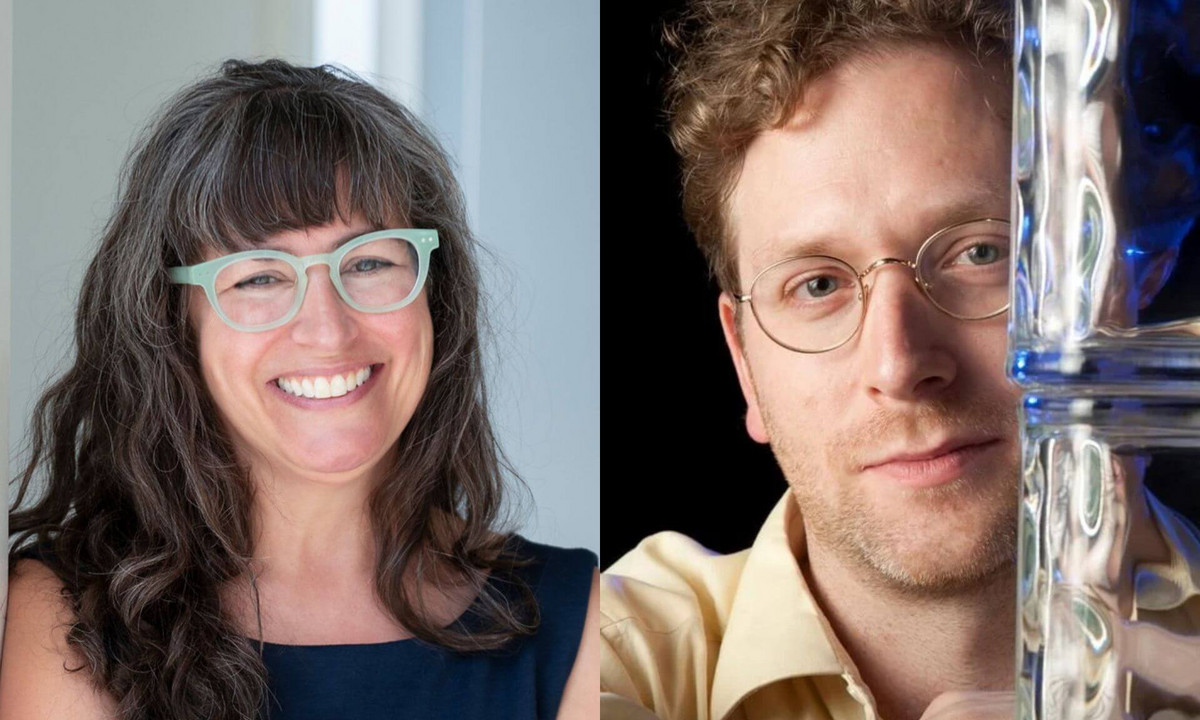
This is the question taken up by Ulysse Klatzmann, a postdoctoral researcher in cognitive and computational neuroscience at Sainte-Justine hospital and Université de Montréal, and his German colleague Adrien Doerig, a professor at Freie Universität Berlin.

In a new article titled “What biology can, and cannot, tell us about conscious AI," the two neuroscientists skirt the issue of whether today’s AI models are conscious, and instead pose a more foundational question: what can biology tell us about the possibility of artificial consciousness?


Can a machine have subjective experience?

But first, we need to agree on what consciousness is, they point out. The term can mean many things: being awake, having perceptions, engaging in self-reflective thought.

Klatzmann and Doerig focus on phenomenal consciousness: having subjective experience. Seeing a blue sky, hearing a song, feeling pain: we know these experiences exist because we live them. We just don’t know how the brain produces them.

“We humans share an intuition about what consciousness is,” Klatzmann said. “We spontaneously attribute consciousness to humans and other animals, but not to a bench or a machine.”

Artificial intelligence complicates this intuition. Existing models can produce coherent texts, solve math problems, recognize images and carry on conversations, sometimes giving the impression that we are interacting with a person who understands what we are saying.

If a machine behaves as though it’s conscious, does that mean it is?

“We have long linked consciousness to intelligence and cognition,” Klatzmann observed. Yet AI now mimics some of those cognitive functions, and still we have no reason to think it experiences anything. So how do we tell the difference between a machine that simulates consciousness and one that has experiences?

Is biology essential to consciousness?

Biological naturalism, the view that biology is indispensable to conscious experience, is gaining ground in debates about consciousness. It holds that living systems possess something irreplaceable—something artificial systems lack—that is necessary for consciousness.

All conscious beings that we know of are living organisms. Humans and other animals have biological brains; tables and computers do not. But this doesn’t necessarily prove that biology is necessary. Just because a phenomenon has always appeared in one context doesn’t mean it can’t appear in another. To make that case, you'd have to explain what biology contributes that is indispensable.

Klatzmann and Doerig consider whether biology might be intrinsically special. Suppose a machine exactly replicated every function of a human brain—would it be conscious? Under biological naturalism, the answer would be no, simply because the machine lacks biological matter.

To illustrate this argument, the co-authors propose a thought experiment: imagine that part of a person’s brain were replaced by a computer chip that performs identical functions. The person continues to see, speak and behave exactly as before. But would they have the same consciousness? Biological naturalism would have to say no—because part of the brain is no longer biological.

Yet if the person’s behaviour, responses and self-reports remain unchanged, no observable measure could distinguish the before from the after. This, the authors argue, is a critical weakness: a theory that ties consciousness to biology but makes no testable predictions cannot be experimentally verified.

What the brain does, not what it’s made of

The researchers also describe another theory. Functionalism argues that it is not biological substance per se that makes for consciousness. Rather, the brain is conscious because it performs specific information-processing tasks. In this sense, biology could play a key role without being, in and of itself, a necessary condition for consciousness.

What features of the brain might matter? Possibilities include the continuous nature of neural dynamics, the self-regulating properties of organisms, the way neurons integrate information, or the interplay between different levels of brain activity. 

The brain works differently from a computer in these respects, but that doesn't necessarily mean these differences are what generate consciousness. Take continuity: the brain operates through continuous, dynamic processes, whereas computers are discrete and digital. But weather systems are also continuous and chaotic—and computers can model them effectively. Perhaps they could similarly capture the essential features of human cognition.

For any brain function to be considered indispensable to consciousness, it would therefore be necessary to demonstrate how it plays a role in consciousness.

Beware of intuition

Many arguments against artificial consciousness are intuitive. For example: all known conscious beings are biological, therefore consciousness must be biological. But that logic doesn’t hold, the neuroscientists argue. All known humans live on Earth, yet living on Earth isn’t a necessary condition for being human.

Another common intuition: large language models are “just trained to predict the next word,” so they don’t possess true cognitive abilities. But reducing a complex process to something apparently simple may not exhaust all of its properties. By the same token, you could say humans are “just selected to pass on their genes.”

Our intuitions about consciousness must be treated with caution, said Klatzmann. “The history of science shows that things that seem self-evident may turn out to be false. Matter seems solid, but we now know it is mostly empty space. Time seems universal, but relativity shows it isn’t. Why would our intuitions about consciousness be infallible?”

So, could AI models become conscious in the future? In their article, the co-authors  offers no definitive answer. Klatzmann describes himself as agnostic about the possibility. “I would be surprised if current AI models develop consciousness,” he said, “but we can’t entirely rule it out.”

As technology evolves, the question may have to be framed differently. Even if biology is indeed necessary for consciousness, it is possible that humans will someday be able to build artificial systems with biological properties. 

On the other hand, if consciousness depends on certain functions rather than biology, a  determination would have to be made as to what those are. And the question wouldn’t be whether a machine can become biological but rather which properties of the brain are essential to conscious experience and whether a machine can reproduce them.

For now, the answer remains open.

Share