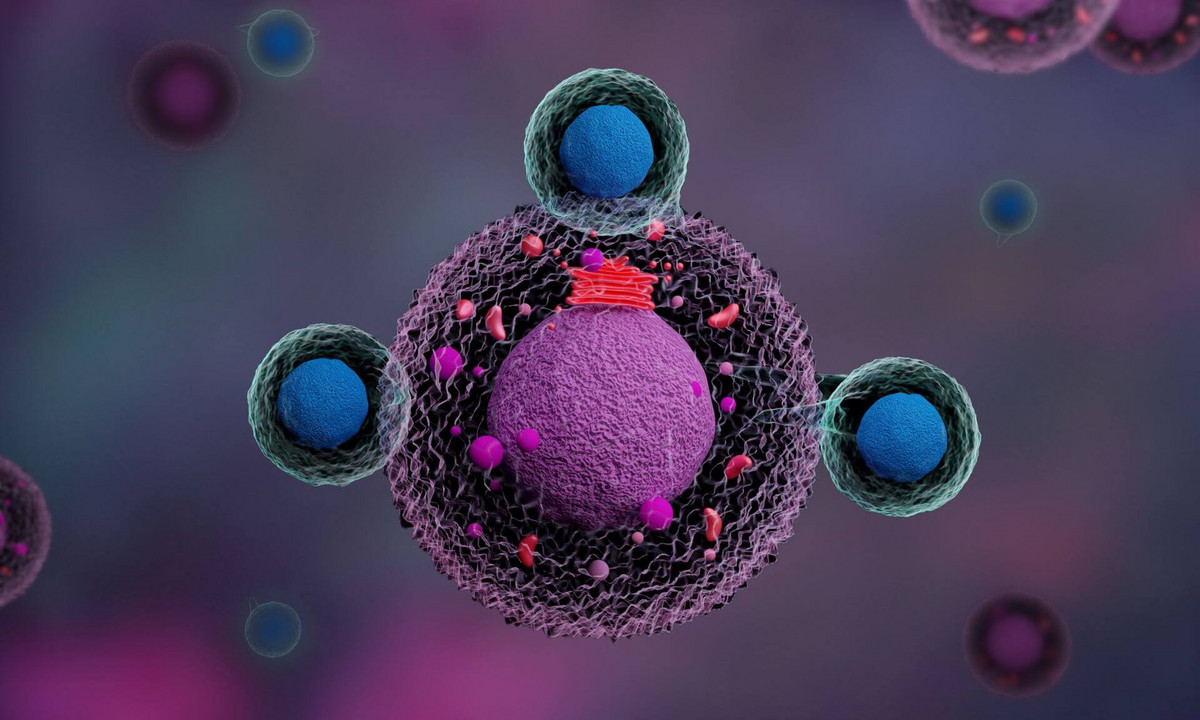
To fight infections effectively, B cells—key cells of the immune system—must produce a vast diversity of antibodies. To achieve this, they deliberately modify their own DNA using the enzyme AID, which introduces mutations into antibody genes to improve their effectiveness.
This strategy is essential to immunity, but it comes with a significant risk.
“AID is both essential and potentially dangerous,” said Di Noia, head of the IRCM's 'molecular biology of the B cell' research unit. “If this enzyme acts in the wrong place in the genome, it can damage important genes, cause chromosomal rearrangements and contribute to the development of B-cell cancers.”
For more than 20 years, scientists have been trying to understand why AID targets certain genes while sparing thousands of others that are also active.
Putting the enzyme where it's needed
Di Nola's research team discovered that the proteins MLLT1 and MLLT3 play a central role in this selection process.
These proteins recognize specific chemical marks on histones—the proteins around which DNA is wrapped. The scientists showed that regions of the genome with exceptionally high concentrations of MLLT1 and MLLT3 correspond precisely to the sites where AID induces mutations. This was observed in both animal models and humans, including lymphoma cells.
When the researchers simultaneously removed MLLT1 and MLLT3, antibody diversification and AID-induced mutations virtually disappeared, even though the enzyme remained associated with DNA and the affected genes continued to be expressed.
The study shows that MLLT1 and MLLT3 interact directly with AID and concentrate it locally near targeted genes. These proteins appear to be capable of forming tiny molecular compartments, known as “condensates,” which act as gathering points for the enzyme.
Because AID is naturally inefficient, concentrating it locally greatly increases the likelihood that a mutation will occur.
“Our findings reveal a previously unknown layer of control,” said Di Noia. “Only regions of the genome that accumulate sufficient levels of MLLT1 and MLLT3 can concentrate AID enough to enable efficient mutation. This helps explain how evolution has been able to tolerate such a dangerous enzyme without broadly compromising genome integrity.”
Better understanding blood cancers, too
This discovery provides new insight into how the immune system harnesses targeted mutations while limiting DNA damage.
It also provides a conceptual framework for understanding why certain regions of the genome are frequently mutated in lymphomas and other cancers derived from B cells.
Particularly promising is the research team’s observation that molecules capable of inhibiting MLLT1 and MLLT3 reduce both AID-dependent mutations and chromosomal translocations associated with cancerous transformation in experimental models.
These proteins could therefore represent future therapeutic targets for slowing the progression of certain lymphomas or limiting the emergence of treatment resistance. Since MLLT1 inhibitors are already in clinical development for certain forms of leukemia, their repurposing could eventually be considered for diseases in which AID plays a key role in tumour progression.