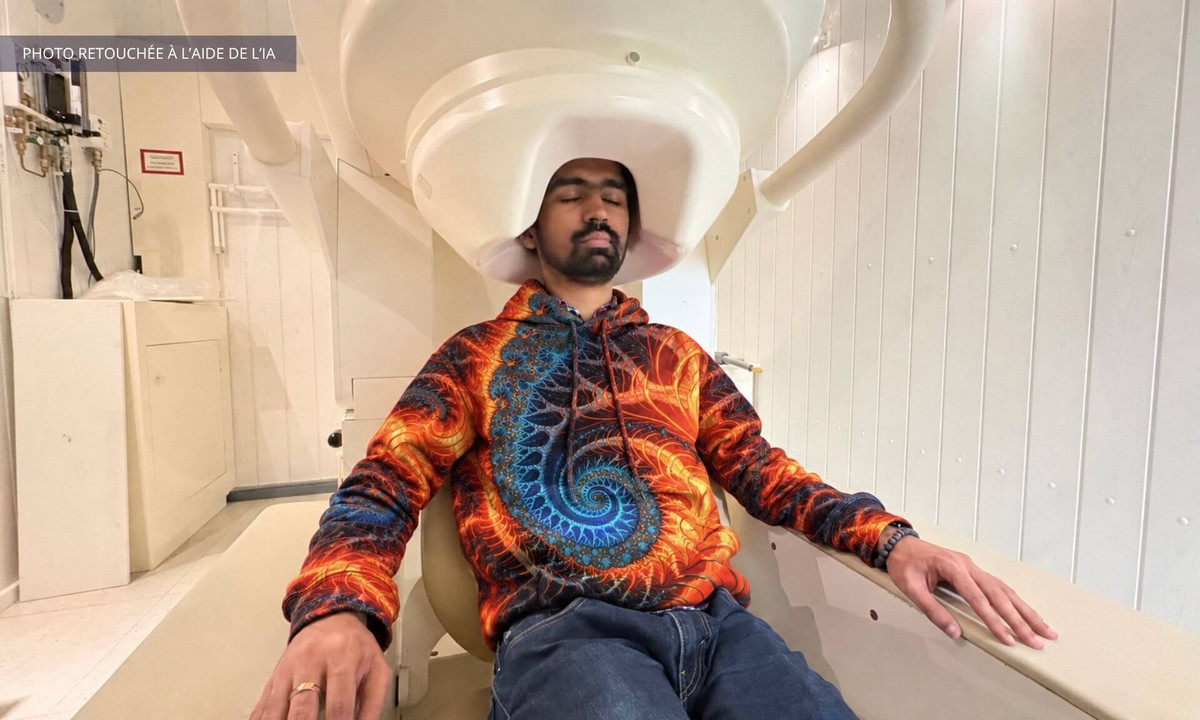
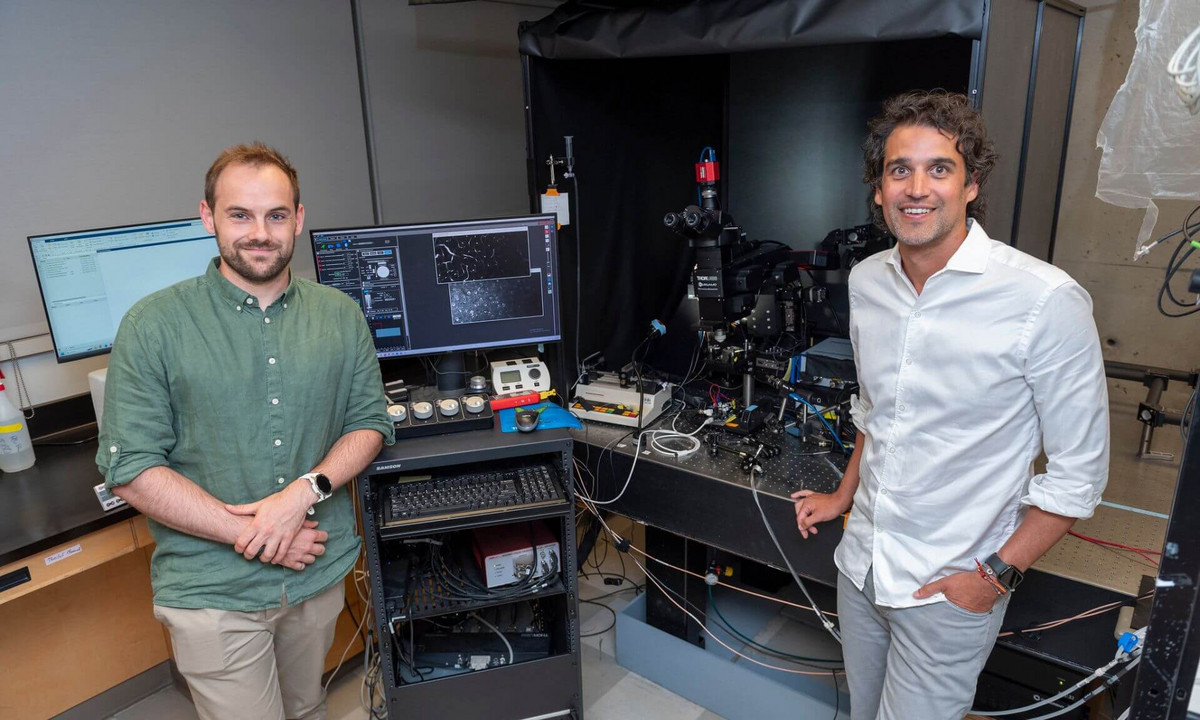
Three early-career professors at Université de Montréal are among the 26 scientists selected this year by Brain Canada for its Future Leaders in Canadian Brain Research program. Shady Rahayel, Sami Obaid and Thomas Parmentier will each receive $100,000 to pursue projects on neurodegenerative diseases, brain connections and communication between neurons.
Launched in 2019, the program supports exploratory research projects in brain and mental health. To date, it has supported 157 early-career researchers across Canada.
Identifying early signs of neurodegenerative diseases
An assistant professor in the UdeM’s Department of Medicine and a researcher at Santé Québec—Nord-de-l’Île-de-Montréal—Universitaire, Shady Rahayel studies isolated REM sleep behavior disorder.
The condition, which can cause people to move or act out their dreams, is considered one of the strongest early warning signs of certain neurodegenerative diseases, particularly Parkinson’s disease and dementia with Lewy bodies. However, it remains difficult to predict who will develop one disease or the other, or when.
Rahayel will focus on the role of iron in the brain during this early phase. His team will use a magnetic resonance imaging technique that can provide clues about the presence of iron in brain tissue.
The research will be conducted as part of iSYNC, an international brain imaging collaboration focused on this sleep disorder and led by his laboratory.
Mapping the functions of white matter
Sami Obaid, an assistant clinical professor in UdeM’s Department of Surgery and a neurosurgeon at the CHUM, is studying the brain’s white matter, which consists largely of bundles of nerve fibers connecting different brain regions.
While their role in transmitting information is well established, the specific functions of many of these connections remain poorly understood, particularly those involved in memory, attention and planning.
Obaid will use stereoelectroencephalography, a procedure performed in some people with drug-resistant epilepsy. Electrodes temporarily implanted in the brain are used to locate the source of seizures, but they can also stimulate specific white matter pathways and reveal the effects of that stimulation.
By combining these data with advanced imaging techniques, Obaid aims to create a detailed functional atlas of these connections. This map could notably help neurosurgeons better identify and preserve critical pathways during surgery.
Exploring the role of viral remnants in neurons
The project led by Thomas Parmentier, an assistant professor in UdeM’s Department of Clinical Sciences at the Faculty of Veterinary Medicine, focuses on endogenous retroviruses.
These genetic sequences come from ancient viral infections that became integrated into the genome over the course of evolution and account for about 8% of the human genome. Long regarded as “junk DNA,” some of these sequences are nevertheless active in neurons.
Parmentier wants to determine whether they play a role in communication between nerve cells. To do so, his team will study extracellular vesicles, small structures released by cells that carry various molecules to neighboring cells.
Using neurons derived from human stem cells, the researchers will analyze the contents of these vesicles and determine whether the presence of endogenous retroviruses varies according to neuronal electrical activity. They will also use the CRISPR gene-editing tool to measure the effects of specific sequences on gene expression, electrical activity and cell survival.
The work could also contribute to a better understanding of certain neurodegenerative diseases, as dysregulated expression of these sequences has been associated with amyotrophic lateral sclerosis and multiple sclerosis.
The Future Leaders in Canadian Brain Research program is supported in part by the Azrieli Foundation and Brain Canada through the Canada Brain Research Fund.