The EU Summit: 3 questions to Laurence Deschamps-Laporte

In 5 seconds As Canada prepares to host European leaders in Montreal on Oct. 29 and 30, the UdeM political scientist and CÉRIUM scientific director looks at what she expects to see discussed.
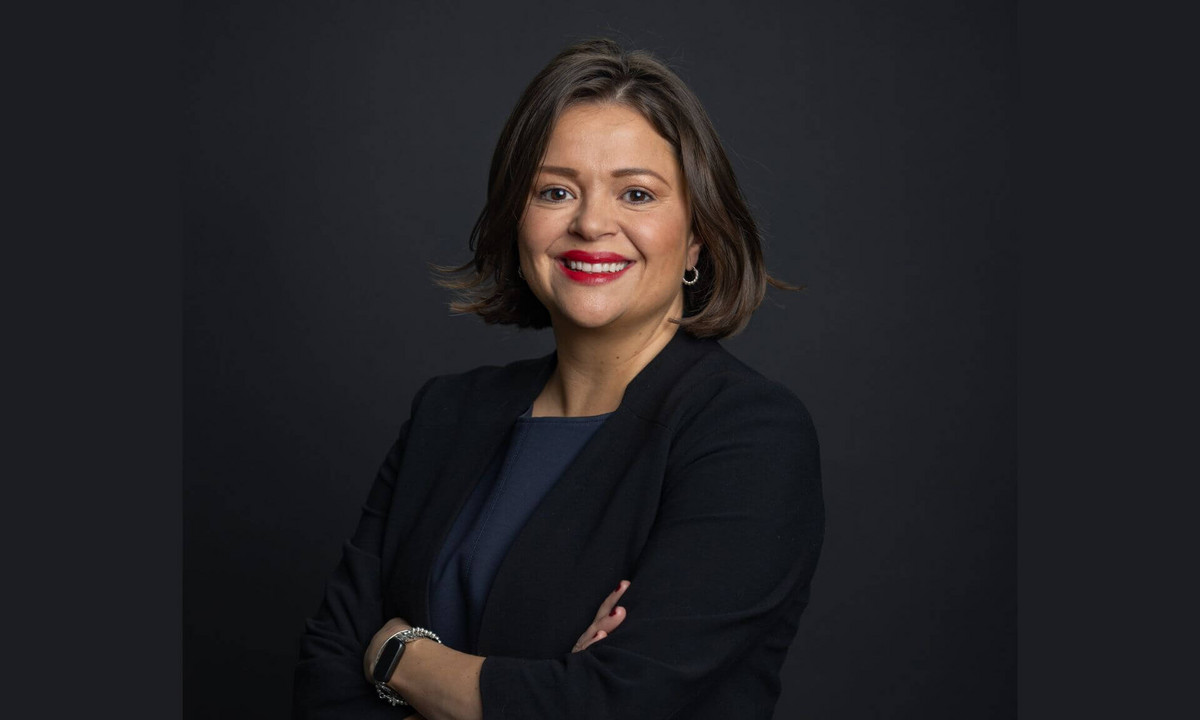
Laurence Deschamps-Laporte, professor in the Department of Political Science at Université de Montréal

On Oct. 29 and 30, Canadian prime minister Mark Carney will host European Commission president Ursula von der Leyen as well as European Council president António Costa and other top European Union leaders in Montreal.

The EU-Canada Summit follows a recent proposal by von der Leyen to make Canada the EU's first-ever associate member, and, according to a leaked draft joint statement, will include discussion of establishing closer strategic, technological and economic ties between the two.

All this, against a backdrop of U.S. president Donald Trump's massive tariffs on global imports.

Université de Montréal political scientist Laurence Deschamps-Laporte is scientific director of the Montreal Centre for International Studies, otherwise known as the CÉRIUM. We asked her to tell us what to expect.

Questions Answers

You're very familiar with bi- and multilateral negotiations, having worked as chief of staff to three Canadian foreign ministers and as a consultant at McKinsey & Company. What goes on at these types of summits, and what signals do they send to other players?

In typical summits, the principles to be decided upon are drafted in advance and the countries' key ministers just show up for the final performance. But this is a different kind of event altogether: not only is Canada’s prime minister directly involved but so is the president of the European commission herself, along with the usual diplomats and ministers.

It's been said that Canada is by no means on a path to adhesion or full integration into the EU as a member state. That's true. But symbolism is also really important in foreign affairs and international relations. And I think it's a very positive sign that Canada is so warmly welcomed and getting all this positive attention from the EU. We're not part of the 'club' like France and Germany are, but at least with relations with the U.S. so strained, we don't feel so alone.

So this summit is very meaningful at this particular moment in Canada's history.

Indeed, the meetings come at an anomalous juncture in trade between Canada and the U.S., and a number of issues will be raised: everything from defence to AI to critical minerals. What, in your view, are the most important at this time?

Everything is on the table, but I'm watching out for two things in particular. One is any concrete proposals that could affect us as a university: things like gaining greater access to the EU's Erasmus+ funding program, or to their labour markets and education markets. The second pertains to Canada as a nation: what do we get on the defence front and on integration into European supply chains? 

Right now, it's really hard for us to get in the door there, as we mostly sell parts and components made by small and medium-sized businesses that can't compete with suppliers in France and Germany, which pretty much dominate the EU supply chain and are deeply integrated. With Canada now ramping up defence spending, is there a plan to integrate us into that chain, too, and lessen our reliance on contracts with the U.S.?

One last thing: Ukraine. Will there be any joint commitment or specifics on helping Ukraine defend itself, especially now with winter coming? The change of seasons brings new complications for the Ukrainian military, and Russia has been increasingly aggressive lately, so it's going to be tricky.

Two documents are being talked about in the lead-up to the summit: a leaked draft of the final statement, and a Canadian policy-experts paper calling for Canada and the EU to draw up a "compact" as middle powers. Together, do these map out a significant change in tack?

We'll see.

I'm not completely surprised by the call for a compact. Over the years, there's been discussion, especially with France but also with Germany, of building an international alliance of like-minded powers. Carney himself, in his speech to the World Economic Forum at Davos last January, made a case for pragmatism in this area, of building fit-for-purpose alliances. The intention matters in a world where, unfortunately,  cooperation is no longer very popular.

That doesn't mean we'll see any new institutions coming out of this summit. Rather, I think we'll see a reaffirmation of preserving existing multilateral institutions that, since the Second World War, have been hard-won and hard-to-build, though imperfect: namely, the United Nations, the World Bank and the International Monetary Fund. If Canada and the EU can put their energy into them, modernize them and try to build more legitimacy and confidence in them, that would be a good investment of their capital.

But let's see what comes out of the summit's final statement. I'm quite optimistic. I think this event is one of the rare moments in the calendar of international affairs this year that gives us a little hope, where we can say that something good will come out of it for Canada and for the EU. The fact it's all happening in Montreal is a positive for our students of political science, too, as it should be for anyone here who's interested in international affairs.

I hope we'll come away with more ideas of how, as experts, we can support these initiatives.

Media requests

Université de Montréal
Phone: 514-343-6111, ext. 75930