Every day, large quantities of human-generated synthetic chemicals enter Quebec’s wetlands and waterways, altering natural cycles.
One example is triclosan, a chemical compound found in a wide range of everyday consumer goods such as toothpaste, soap and deodorant. Triclosan is used as a preservative and antimicrobial to inhibit the growth of bacteria, fungi and mould.
But once released into the environment, triclosan can harm organisms at the bottom of the food chain, such as algae and microalgae, and the fetuses of some fish and frogs. It also affects microbial populations, contributing to the development of potentially antibiotic-resistant strains of bacteria.
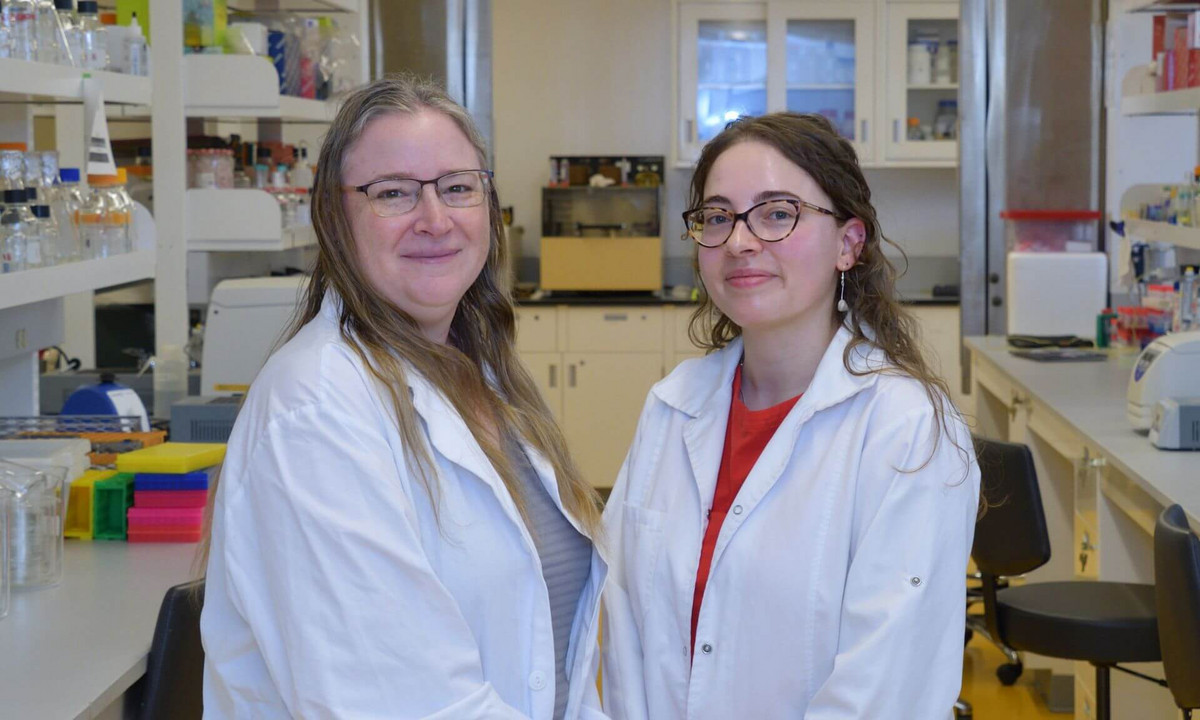
Laurianne Bédard, a master’s student in biological sciences at the University of Montreal, is studying the possibility of removing this contaminant using constructed wetlands.
Her project involves 50 mesocosms—controlled environments that reproduce natural settings—composed of three plants native to Canada: spotted joe-pye weed, American reed and prairie cordgrass.
Under the supervision of Joan Laur and Jacques Brisson, professors in the Department of Biological Sciences at UdeM, Bédard is assessing the plants’ filtration potential, individually and in combination.
“We already know that American reed and prairie cordgrass are effective in removing a number of other contaminants,” she said. “But the idea is to find out whether they also work for triclosan and to see if biodiversity—combining plants—enhances the effect. Conversely, if the results are negative on both counts, we’ll know that these species are not the best for this purpose. And if a species is found to be very sensitive, it could potentially be used as a bioindicator for monitoring the contaminant in the water system.”