Pedalling made easier
In a recent study, the team tested whether tendon vibration applied using a strap-on vibrating device could reduce the perception of effort during cycling.
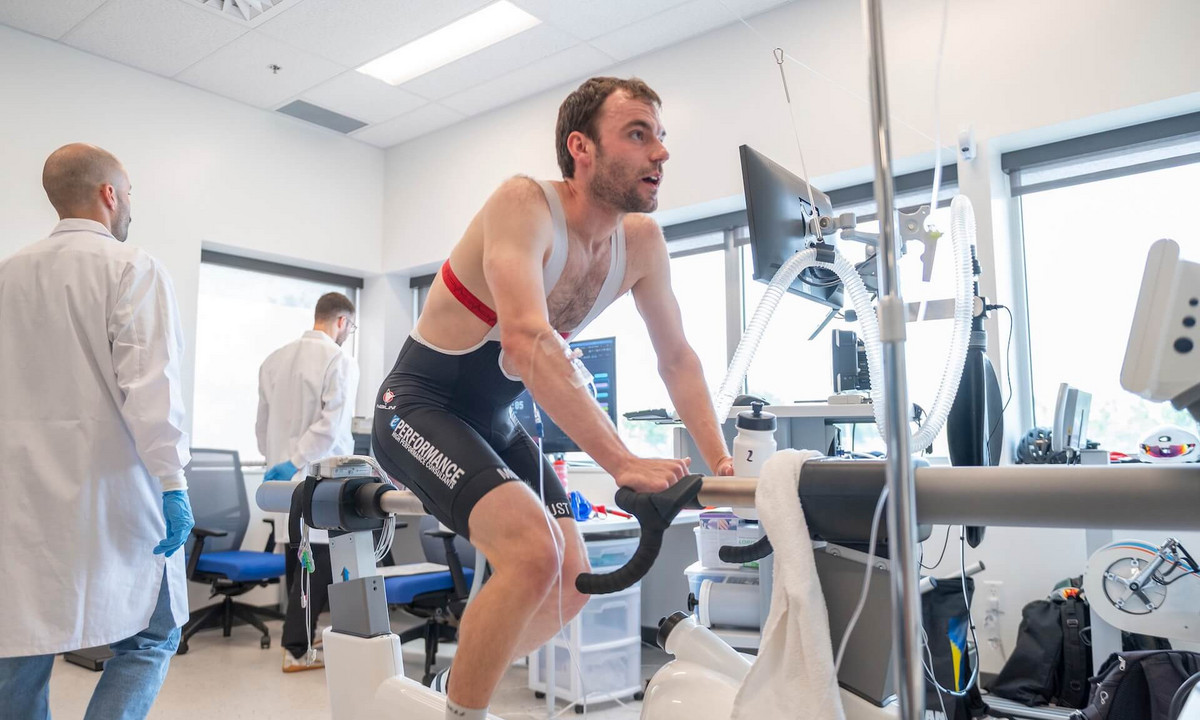
In the experiment, volunteer participants pedalled on a stationary bike in the lab. All participants underwent two test conditions: with and without tendon vibration before cycling.
In the vibration test condition, the device strapped to their Achilles and knee tendons was activated for 10 minutes before they began cycling.
The participants then had to pedal for three minutes at a level of effort perceived as moderate or intense, adjusting their pedalling to match the prescribed intensity.
The results were clear: participants exhibited higher power output and heart rate after tendon vibration than without vibration. They exerted more effort, even though their perceived effort was the same.
Altered neuronal signals
The researchers are also interested in understanding the neurophysiological mechanisms behind the effect of tendon vibration on perceived effort. Although the exact mechanisms are still unknown, Pageaux has a few hypotheses.
“Depending on the amplitude and frequency of the vibration, we can either excite or inhibit neurons in the spinal cord,” he said. “Also, prolonged vibration changes the reactivity of the neuromuscular spindles and alters the signal sent to the brain.”
In other words, by modifying the information sent to the brain, the participants’ perception of movement and effort was altered, making them feel the exercise was less demanding, even though their muscles were actually working harder.
Promoting exercise
Although the results are promising, research on tendon vibration is still in its preliminary stages.
“It hasn’t been tested in a marathon, only during a short, three-minute cycling exercise,” Pageaux cautioned. “Still, this is the first time it’s been shown to work with this type of exercise.”
The next step is to delve deeper into what’s happening in the brain. The team plans to use techniques such as electroencephalography and magnetic resonance imaging to observe how tendon vibration affects brain activity during exertion.
They’re also exploring the opposite effect: how pain and fatigue can increase the perception of effort and make physical activity more challenging.
Ultimately, these studies aim to develop techniques that reduce the perception of effort in order to encourage sedentary individuals to exercise more.
“By gaining a better understanding of how the brain evaluates the link between effort and perceived reward during exercise, we hope to promote more regular physical activity,” Pageaux said. “And we all know how essential staying active is for our health and well-being!”