Far from benign
Myopia was long considered a refractive error easily corrected with glasses. This view is now considered obsolete.
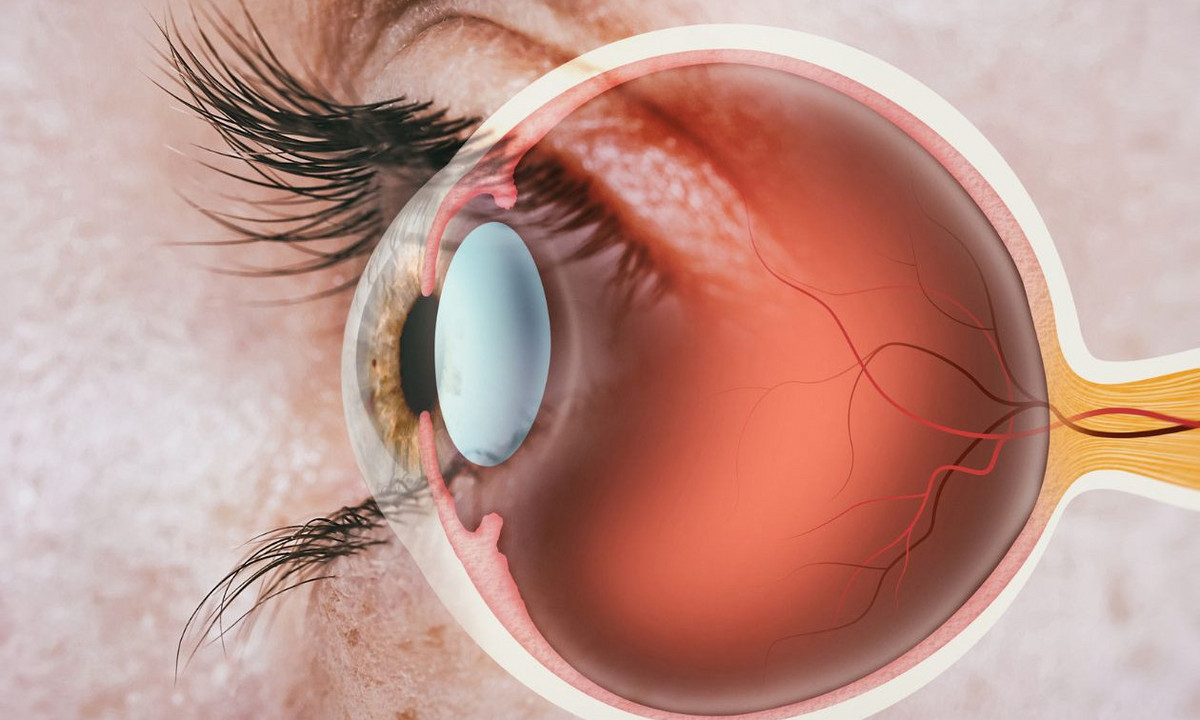
As early as 1995, the World Health Organization sounded the alarm, and evidence has since mounted that myopia is not a benign visual defect. The myopic eye gradually elongates pathologically, becoming increasingly fragile as it stretches.
Michaud uses a vivid metaphor: “It’s as if we all had the same shirt. If I gain 20 kilos, the seams will burst. It’s the same with the eye: when it stretches, the retina cracks, tears or detaches.”
Complications can be severe: retinal detachment, glaucoma, early cataracts and, in extreme cases, retinal hemorrhaging similar to what happens in macular degeneration, which can lead to blindness.
Today, the World Health Organisation recognizes myopia as a preventable cause of blindness, and the U.S. National Academy of Sciences classifies it as a disease. Therefore, says Michaud, eye-care professionals must not only correct patients' vision but also educate people, prevent and slow the progression of the disease.
Exercise, sleep and diet
While genetics determines about 30 per cent of the risk of developing myopia, environmental factors are also critical. Small changes in one's environment can make a big difference for the health of eye.
Multiple studies have shown that spending at least two hours a day outdoors helps protect children against myopia. Natural light stimulates retinal dopamine, a molecule that limits eye elongation, while exposing children to a richer visual environment. Delaying the onset of myopia by even a few months significantly reduces the risk of severe myopia in adulthood.
Managing screen time is another important factor. “Parents shouldn’t use tablets to soothe a baby in a stroller,” Michaud advised. “They should aim for zero screen time before age two. The screen itself isn’t so harmful; the problem is the viewing distance.”
Between ages two and 10, studies recommend limiting recreational screen time to about an hour per day, excluding time spent on homework. Ideally, children should take a two- to three-minute break every 30 minutes and stay at least 35 to 40 centimetres away from the screen. Phones are particularly problematic because they are often held much closer.
A third preventive recommendation is maintaining a healthy lifestyle. Regular physical activity, adequate sleep and a low-sugar, low-salt diet help reduce inflammation and insulin resistance, two factors linked to faster progression of myopia. Preventing childhood obesity, another well-documented aggravating factor, is also important.
Treating myopia with controlled blur
Myopia treatment was revolutionized by the discovery that the peripheral retina, rather than central vision, plays the dominant role in the growth of the eye.
Modern treatments must therefore correct central vision while inducing a therapeutic blur on the periphery. Conventional single-vision glasses and contact lenses are not recommended, as they “send the wrong signals to the retina, causing the eye to continue elongating,” Michaud explained.
Many tools are now available to slow the progression of myopia. Orthokeratology uses night-wear lenses to temporarily reshape the cornea and create a defocusing effect that is beneficial for the periphery of the retina. The latest designs use a smaller central zone to increase this effect and strengthen control of eye elongation, which is responsible for the progression of myopia. Orthokeratology is considered safe and effective when proper hygiene and care are observed.
Multifocal soft lenses are designed to provide higher convex power at the periphery, whereas peripheral defocus glasses create a significant degree of peripheral blur.
Low-dose atropine is the only pharmacological treatment considered effective for managing myopia. A 0.05 per cent dose appears to be optimal, balancing clinical efficacy with minimal side effects. A 0.01 per cent dose can stabilize refraction but not axial length.
Tailoring treatment to each child
All these treatments work, but none is suitable for every patient. The right choice depends on various factors, including age, rate of progression, axial length, ethnicity, patient preferences, ability to handle lenses and family budget.
“Take a seven-year-old Asian girl with severe myopia and already-elongated eyes,” Michaud said. “We can’t afford to wait. We must act aggressively, sometimes combining treatments. By contrast, a mildly nearsighted Caucasian child may respond well to specialized glasses.”
Compliance is key. “If glasses stay in their case, they don’t help. If they are worn consistently, they will work,” Michaud emphasized. “I always ask: are you prepared to use this treatment every day? Because it takes commitment.”
According to Michaud, Canada is ahead of the curve in this area: “We have several models of defocus glasses approved by Health Canada, which is not the case in the U.S. or in most other countries.”
Red lasers: A dangerous technology
There are also therapeutic approaches that raise serious concerns, such as devices that use red lasers to slow the progression of myopia. While initial trials in chickens seemed promising, cases of retinal damage were soon reported in humans in China.
Biochemical analyses showed temporary destruction of approximately 20 per cent of photoreceptor cells after exposure to red lasers. “They were basically barbecuing the retina with intense exposure,” said Michaud.
China has now reclassified red lasers as high-risk medical devices. In Canada, they are not authorized at all.
Myopia has become a major public health challenge, carrying enormous economic costs in both lost productivity and medical care. “Global losses are estimated at up to US $240 billion annually,” Michaud noted.
Myopia is a top clinical research priority at UdeM's School of Optometry.
“We have developed highly effective treatments at our clinic," said Michaud. "A two-year retrospective study has shown that the progression of myopia in our young patients is below normal eye-growth rates.
"These results are particularly encouraging, as slower progression reduces the risk of future complications. While our methods don’t cure myopia, they can halt its progression almost completely.”