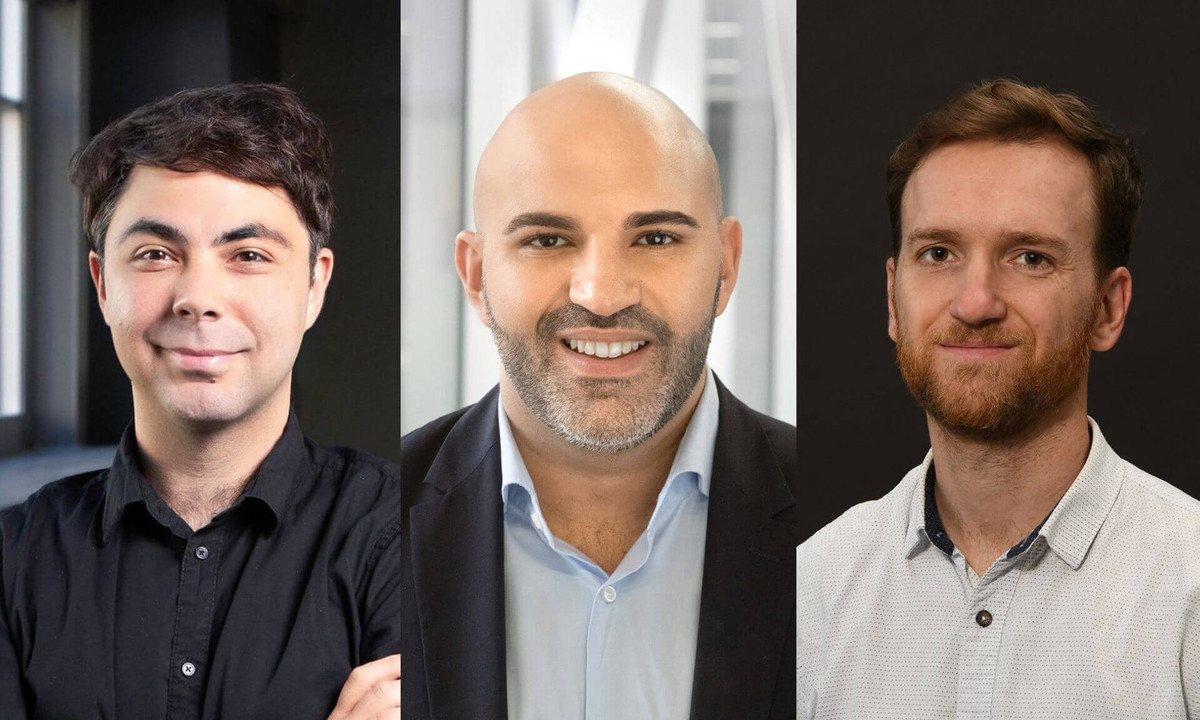
“ML-driven small molecule design of Klebsiella-specific antibiotics,” a research project co-led by Université de Montréal professor Yves Brun, has secured US$3.8 million (about C$5.3 million) over three years from the Gates Foundation.
Run jointly by Brun, of UdeM's Department of Microbiology, Infectious Diseases and Immunology, and Mike Tyers, from Toronto’s The Hospital for Sick Children, the project is one of 18 chosen from among over 500 submissions to a special global funding program.
Launched by the Gates Foundation (formerly the Bill & Melinda Gates Foundation), the program aims to accelerate the development of antibiotics targeting Gram-negative bacteria, a class of pathogens that are increasingly resistant to treatments of last resort.
'Resistant to every known drug'
“For years, we’ve been witnessing a rise in bacterial resistance to antibiotics, with some pathogens now resistant to every known drug,” said Brun, who’s also part of the Institut Courtois d’innovation biomédicale. “If we want to keep fighting these bacteria, we need to continue developing new antibiotics.”
With antimicrobial resistance among the leading global causes of death—potentially contributing to nearly 10 million fatalities a year by 2050—the Gates Foundation hopes to foster the discovery of molecules that can target the Enterobacteriaceae family.
This large group of Gram-negative bacteria comprises over 100 species, including Salmonella, E. coli, and also Klebsiella pneumoniae, a major cause of hospital-acquired infections that the World Health Organization calls a “critical priority” pathogen.
It alone is estimated to be responsible for nearly one in five deaths that are linked to resistance to antibiotics. Indeed, some strains of Klebsiella are resistant to all known antibiotics.
While in theory the chemical space for drug development is vast, exploring it experimentally remains extremely complex. That’s where machine learning and generative artificial intelligence come into play.
To that end, Brun and his team say they will harness these technologies to explore uncharted chemical territories and design novel antibacterial compounds with entirely new modes of action.
A multidisciplinary effort
His research project builds on PandemicStop-AI, a previous initiative funded by the Canadian Biomedical Research Fund. That earlier project laid the groundwork for a strong, competitive grant application, Brun said.
His lab will begin by generating a “fingerprint” of Klebsiella pneumoniae using high-resolution microscopy and CRISPR technology, enabling his research team to observe how the bacterium reacts to a large number of compounds.
“By integrating images into our models, we get rich insights into how the cell is responding to a given molecule—for example, whether the bacteria are dividing less frequently, which could signal that the compound is promising,” said UdeM computer science professor Alex Hernandez-Garcia. In turn, these data will be used to train both predictive and generative AI models.
The predictive models will estimate the bacterium’s sensitivity or resistance to various compounds, while the generative models—developed at Mila, the Quebec AI Institute, by UdeM computer scientists Alex Hernandez-Garcia and his colleague Yoshua Bengio—will propose entirely new molecules designed to target Klebsiella pneumoniae.
Synthesized and optimized
The most promising compounds will be synthesized and then optimized by scientists led by UdeM medicinal chemistry professor Anne Marinier, director of the IRIC Drug Discovery Unit, then tested for antibacterial activity. Lastly, in collaboration with the Montreal biotech company Simmunome Inc., a digital twin of the bacterium will be created to better understand how it responds to antibiotics and to further explore mechanisms of resistance.
“To fight antibiotic resistance, we need to bring together the complementary diverse expertise" of global leaders in microbiology, chemical biology, medicinal chemistry and machine-learning research, as exemplified by those involved in the Gram-negative bacteria project, Marinier said.
"It’s precisely this kind of multidisciplinary approach sparks ideas that would otherwise never emerge."