A building fit for a council, not a king

In 5 seconds Digging at the ancient Mayan city of Ucanal, in Guatemala,Christina Halperin finds evidence of a new kind of political architecture that reflect a shift away from divine rule over 1,000 years ago.
Excavations of Ucanal Structure K-1, a possible Terminal Classic council house

To understand the political landscape, look at the architecture: that's what Université de Montréal anthropology professor set out to do on a dig last year at the ancient Lowland Maya city of Ucanal, in Guatemala.

What she found there was evidence of a new kind of political architecture — council houses — that reflect a shift away from divine rule during the Maya's Terminal Classic period, around 810 to 1000 A.D.

Co-authored by UdeM graduate student Laurianne Gauthier and Proyecto Arqueológico Ucanal (PAU) co-director Carmen Ramos Hernandez, a study detailing Halperin's findings is published today in the journal Antiquity.

"The Terminal Classic period is known as a period of tremendous political instability and crisis, when the population of many sites in the Southern Maya Lowlands declined," Halperin noted. “How did Maya peoples rework their governing systems during this time of political instability?"

Dynasties of kings dominated

Up until then, during the Classic period (c. 300 to 810 A.D.), governance in the Lowlands was characterized by a system of 'divine' monarchy, whereby a succession of dynastic kings controlled the populace and expressed their power through imposing palaces and pyramids.

By the Late Postclassic period (c. 1200 to 1521 A.D.), however, Maya governments relied heavily on council-based systems, in which political decisions were made through consensus and resulted from power-sharing between leaders.

Just how did this transition occur? In her dig, Halperin came up with some answers. She and her colleagues excavated a Terminal Classic civic building, a colonnaded open hall that was likely an early example of a council house.

In it, political leaders, including kings, nobles, and lineage heads, met to deliberate on political accords, discuss war, adjudicate crimes, feast and prepare for weddings and dances, Halperin suggests.

"The open nature of the building meant that meetings were visible to the public," she said. “While there was almost certainly a theatrical nature to this public display of government, it also highlights the importance of public participation in politics during this period.”

This stands in direct contrast to the Classic period, in which many political decisions took place in enclosed, internally segmented palaces, emphasising the hierarchical relationship between the king and members of the royal court.

"Another feature of the new civic-ceremonial architecture was that they were located in large public plazas," Halperin added. “Because their facades were open, the interior activities in these buildings could be seen by anyone in the plaza spaces.

"Governance had become, in a sense, more transparent.”

Not just the elites

Radiocarbon dating found the building's construction coincided with the emergence of a new ruler at Ucanal: Papmalil. Under his reign and that of subsequent rulers, new public buildings and water infrastructure projects were built that benefited all residents, not just the elites.

This suggests that the public were not only able to participate in politics as spectators and witnesses, but that they may have also influenced the decisions being made by the elites, signifying that public consensus became important to the maintenance of power.

Therefore, the Terminal Classic emergence of colonnaded open halls indicates this new form of building helped condition a more co-operative form of Maya governmentality, a more civically engaged populace and, ultimately, the increased influence of ordinary people on Maya politics.

“Ancient Maya societies did not collapse," said Halperin, “they reworked their institutions and political arrangements. One of these reinventions was an effort to counter the weight of paramount kings and create more consensus-based governing systems.”

More generally, the finding confirms what anthropologists have long maintained: that public buildings are not passive reflections of culture, but are enmeshed in a reciprocal relationship between spatial order and social behaviours, political dispositions and ideologies.

In other words, they not only have the potential to serve as symbolic ideals and physical seats for the institutions of governments. They are also ‘participants’ in how relationships of power are enacted and experienced by more than just those holding political titles of authority. 

And in that sense, public buildings are as much the constituting features of the political order as they are constituted of it.

A 45-person team

The Ucanal site is located in a remote region of northern Guatemala near the border with Belize. Its name means “place of the yellow mountain.”

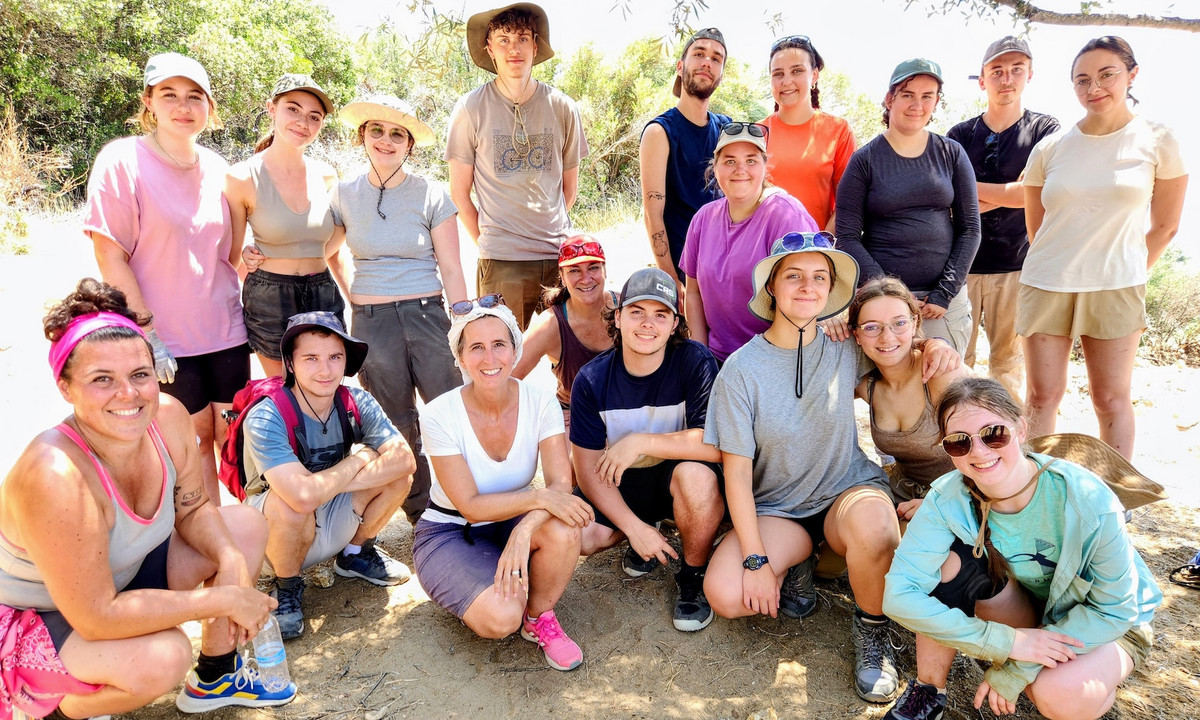
Since 2014, Halperin has led a multidisciplinary international team of archaeologists and students probing its mysteries.

The PAU involves some 50 researchers and students from a number of institutions, including many from UdeM and others from Universidad de San Carlos de Guatemala, McGill University and several American universities.

Media requests

Université de Montréal
Phone: 514-343-6111, ext. 75930