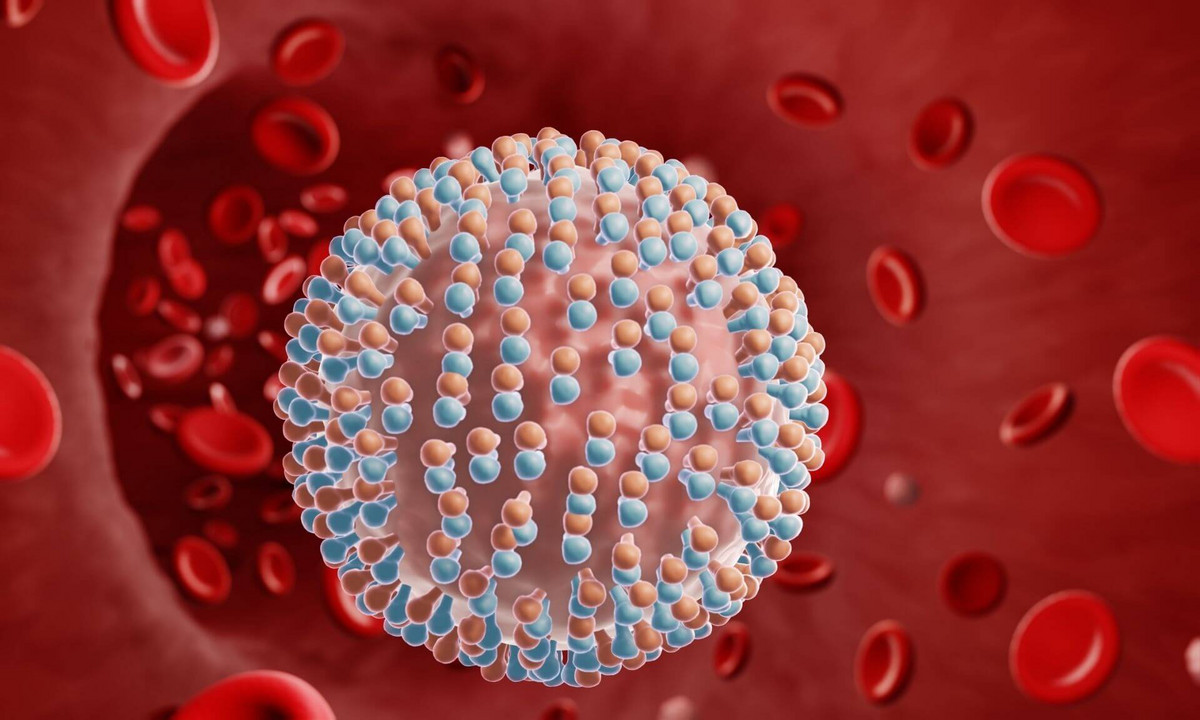
Scientists at the Université de Montréal's affiliated Montreal Clinical Research Institute (IRCM) have identified a new family of natural molecules with strong antiviral activity, notably against the Ebola virus and SARS‑CoV‑2, the virus responsible for COVID‑19.
The discovery comes at a time of renewed fears of the rapid emergence of new pandemics, and highlights the ongoing search at the IRCM for novel antiviral agents derived from natural sources.
Led by UdeM emeritus medical professor Michel Chrétien and Majambu Mbikay of the IRCM’s functional endoproteolysis laboratory, the development is detailed in a study published in the American Chemical Society (ACS)'s Journal of Natural Products.
As early as 2016, and again in 2020, IRCM researchers demonstrated that a plant extract rich in isoquercitrin—a flavonoid found in many plants—exhibited strong antiviral activity in the laboratory.
One critical question, however, remained: was this effect truly due to isoquercitrin itself, or to compounds present in very small amounts within the extract?
To resolve this puzzle, Mbikay and his research assistant Annie Roy went looking for the proverbial “needle in the haystack,” an effort that required nearly 30 months of intensive research.
For help, they brought in Guido F. Pauli, a chemist and leading expert in natural products at the University of Illinois Chicago, and Logan Banadyga, director of the Department of Molecular Virology at Canada’s National Microbiology Laboratory, in Winnipeg.