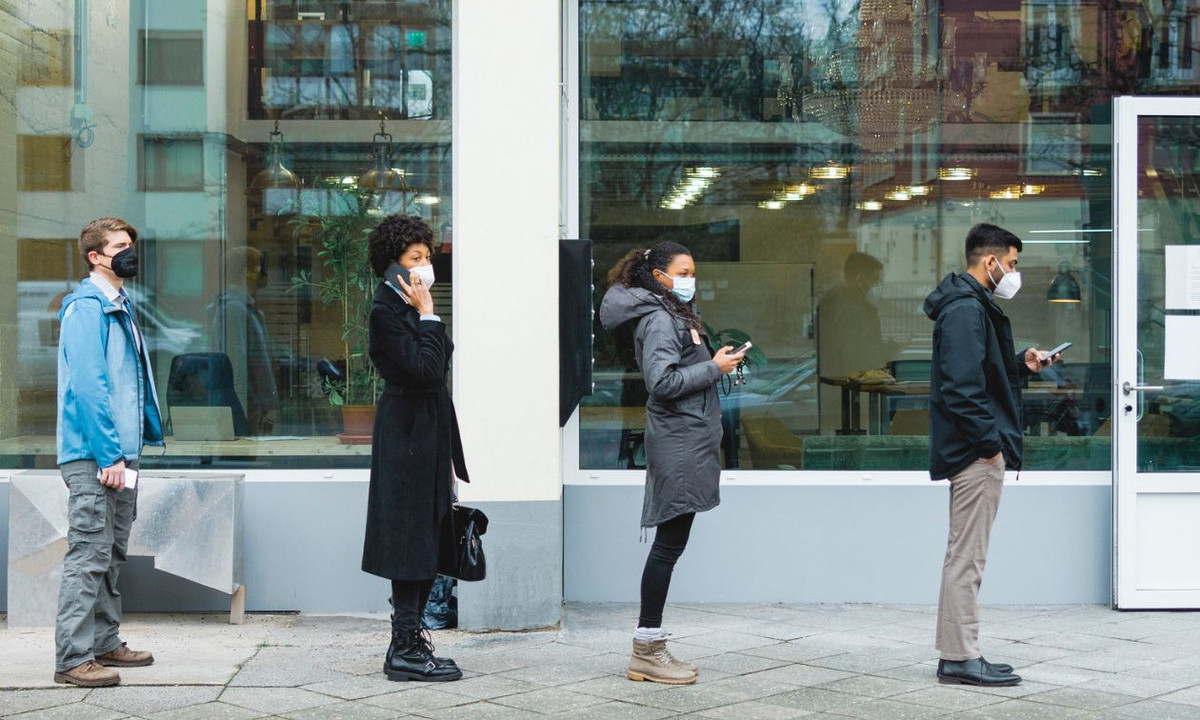
In Quebec, young adults were hit first by the pandemic

In 5 seconds An UdeM-led study argues that people between ages 18 and 29 should be better monitored to help detect new and emerging waves of SARS-CoV-2 and other viruses.
Across all waves, age and healthcare worker status were the characteristics most strongly associated with the risk of being among the first 25 per cent of cases within a cluster.

In the first two years of the COVID-19 pandemic in Quebec, through seven waves of outbreaks, SARS-CoV-2 tended to infect young adults first, before the rest of the population, a new study shows.

That makes them a key demographic to watch as public-health officials try to detect new and emerging waves of that and other viruses, say the Université de Montréal researchers behind the study.

"Our findings suggest that young adults may serve as an early indicator of emerging community transmission," said UdeM epidemiologist Kate Zinszer, an associate professor in the School of Public Health (ESPUM)'s Department of Social and Preventative Medicine.

“Monitoring trends in this age group could help public health authorities identify new waves earlier and respond more quickly to limit onward transmission.”

Throughout the pandemic, COVID-19 cases tended to break out in specific clusters: ethnic, racial, geographic, socio-economic. Health officials had trouble, however, identifying how these clusters emerged and what those affected had in common.

Using Quebec COVID-19 surveillance data from February 2020 to August 2022, through seven waves of the crisis, Zinszer and her colleagues identified characteristics associated with the likelihood of being among the first cases in a cluster.

Their results showed that young adults were consistently at higher risk of constituting the first cases of large community clusters, suggesting that closer monitoring of COVID-19 incidence in this age group could be pivotal for early detection of emerging clusters or new waves.

"Overall, our study provides valuable insights for public health authorities by helping to identify priority groups at the forefront of cluster emergence and by supporting the development of tailored and adaptive interventions," the study's co-authors write.

They include Zinszer and her ESPUM colleagues Adrien Saucier (first author) and Katia Charland, along with Élise Fortin and Christian Lacroix of the Institut national de santé publique du Québec. 

The study was recently published in the journal Spatial and Spatio-temporal Epidemiology.

A detailed look

In all, the researchers took a detailed look at over one million cases of people who'd tested positive for COVID-19. For each case, they collected information on a wide variety of important variables.

These included the person's age, biological sex, municipality, date their case was determined, how many vaccine doses they'd had up to then, whether they had a comorbidity (such a disease or other health condition), their socioeconomic status, and if they worked in healthcare or not.

Through various analyses, the researchers were able to identify, on average, 37 clusters per wave, which became more widespread throughout Quebec as the pandemic progressed beyond Montreal to remote communities such as those in the Lower North Shore and Gaspé.

Across all waves, age and healthcare worker status were the characteristics most strongly associated with the risk of being among the first 25 per cent of cases within a cluster – not a surprising finding for health-case providers on the front line, who were particularly vulnerable.

What was unexpected was that young people between the aged of 18 and 29 tended to have a higher risk compared to other age groups, as well, although this pattern varied slightly between waves.

That may be because young adults generally have larger social networks, more frequent social interactions, and are often engaged in work, education and community activities that increase opportunities for exposure, said Zinszer.

"These factors may place them at the forefront of transmission dynamics, making them an important group for early surveillance efforts," she said.

Variations by wave

Digging into the data even further, senior citizens (70 years and older) had a lower risk of being among the first cases in waves 1, 4 and 5; and healthcare workers were less at-risk in wave 1 compared to non-healthcare workers but at higher risk in wave 3.

"This study is among the first studies on COVID-19 clusters to specifically focus on identifying subgroups or sociodemographic characteristics associated with the emergence of large community clusters," the co-authors write in their study.

But young adults weren't always the highest at risk. In wave 2, three age groups had a higher risk of being among the first cases: 5-to-11-year-olds, 12-to-17-year-olds, and 30-to-49-year-olds. The 30–49-year-olds also surpassed the risk of the 18–29-year olds in wave 1.

Young adults and adults were found to be important drivers of community transmission early in the pandemic, due to their employment and more active, socially engaged lifestyles, the study notes.

The only time children and adolescents of 5-to-11 years old and 12-to-17 years old were more at risk than the 18-to-29-year-olds occurred at wave 2, which corresponded to the beginning of 2020 school year.

"Apart from this exception, children and adolescents did not seem to be drivers of COVID-19 clusters," the co-authors write. “Senior citizens were (also) not significantly represented among the first cases in the clusters, which may be related to their more cautious behaviour.”

Advanced age was a well-established risk factor for severe outcomes following SARS-CoV-2 infection, as were comorbidities, leading those demographics to adopt additional protective measures to avoid infection, the co-authors note.

'Could have better benefited'

But it's young adults who hold the key, they say.

Overall, "COVID-19 control could have benefited from public health strategies specifically designed to monitor and prevent infections in young adults, who appear to be at the forefront of large cluster formation," the co-authors write.

"Such strategies could include risk communication campaigns tailored to (them), as well as the deployment of active testing in workplaces and social settings," they add.

"Identifying social groups that are more likely to be among the first cases in emerging clusters has the potential to strengthen surveillance and prevention not only for COVID-19, but for other transmittable diseases too."

Media requests

Université de Montréal
Phone: 514-343-6111, ext. 75930