Rett syndrome is a rare neurodegenerative disorder that almost exclusively affects girls. It is typically diagnosed in babies between 6 and 18 months of age, when the first symptoms begin to appear.
Now, a new study led by Université de Montréal medical professor Anthony Flamier suggests that the genetic mutation responsible for 95 per cent of classic Rett syndrome cases can be detected as early as the embryonic stage—even before the baby's brain is fully formed.
Using lab-grown “mini-brains,” or cerebral organoids, Flamier and his research team at the UdeM-affiliated Centre de recherche Azrieli du CHU Sainte-Justine observed the disease’s progression from its earliest moments.
This innovative approach allowed the researchers to test molecules that may reverse the neurodevelopmental damage caused by this rare condition – and preliminary findings are highly promising.
From small skin biopsies of eight patients, Flamier extracted fibroblast cells to reprogram them into induced pluripotent stem cells. These were then developed into clusters of neurons known as cortical plates, which mimic the structure of the human brain.
“This is the closest we can currently get to replicating the human brain in a lab,” said Flamier.
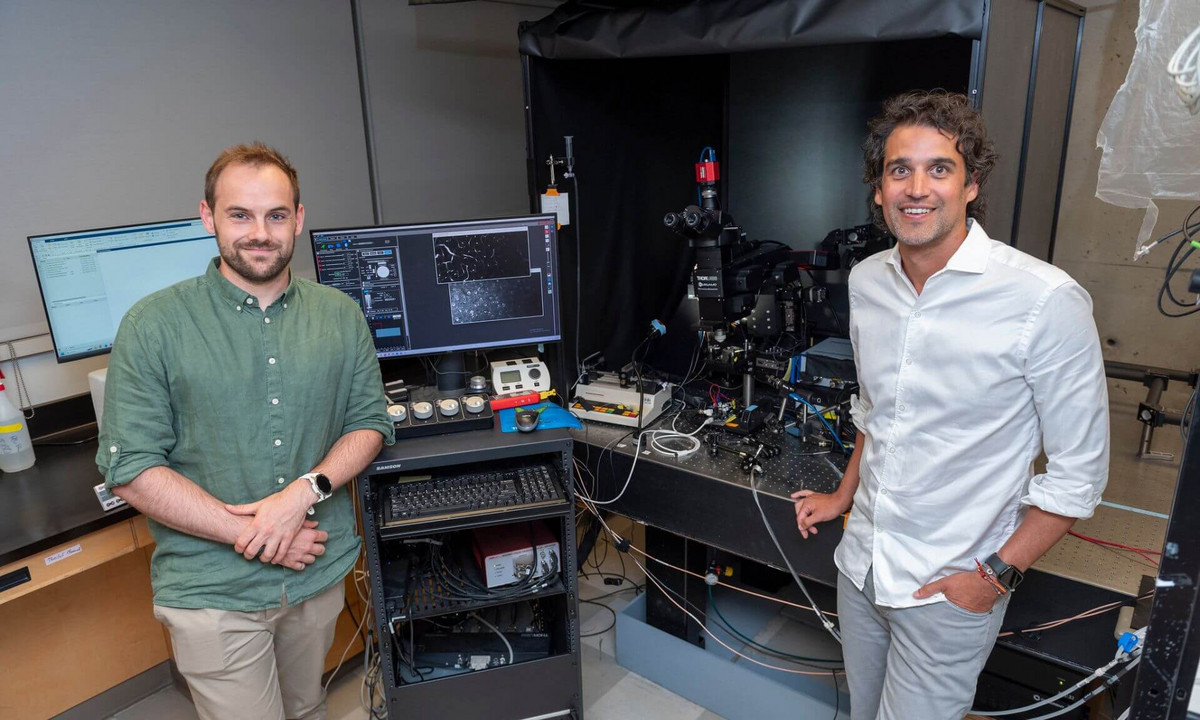
The cortical plates were then placed in a device equipped with electrodes, called Maestro Pro—acquired with support from the CHU Sainte-Justine Foundation—which records the neurons’ electrical activity.
“The electrical signals from Rett patients’ neurons are very distinctive: they produce a jagged pattern instead of smooth waves," said Flamier. "We’ve shown that this is linked to a defect in the primary cilium caused by the genetic mutation."
A long-overlooked 'antenna'
In recent years, Flamier identified the gene whose mutation directly causes many of Rett syndrome symptoms. This mutation affects the primary cilium—a tiny organelle that was long considered irrelevant.
“The primary cilium acts like a miniature antenna on each neuron, capturing external signals,” Flamier explained. “Even a slight mutation can lead to severe symptoms.”
The good news? Some molecules already approved by the United States’ Food and Drug Administration—and safely used with patients to treat other medical conditions—have shown potential to stabilize the primary cilium.
Together with PhD students Margaux Brin and Marion Guillon, Flamier’s team is testing 70 of these molecules on the mini-brains to highlight their effect on neurons’ electrical activity. The initial results are encouraging: already seven of them were able to restore the cilium’s structure and normalize neuronal signaling.
“The next step is to test these molecules on a larger scale through international collaborations,” Flamier said. “Our goal is to determine whether they can reduce symptoms across all patients or only in specific subgroups.” Funding from Brain Canada’s 2025 Future Leaders in Brain Research program will support the continuation of this groundbreaking study.
In the coming months, Flamier’s lab will also receive, from an American biobank, samples of human brains from individuals who died of Rett syndrome. The goal is to determine whether the primary cilium defect is widespread throughout the brain or specific to certain types of neurons.