Functional neurological disorder: it’s not all in your head

In 5 seconds In what will soon be part of the university's medical curriculum, a UdeM-affiliated clinic is using physiotherapy, mindfulness and other techniques to treat the underdiagnosed brain condition.
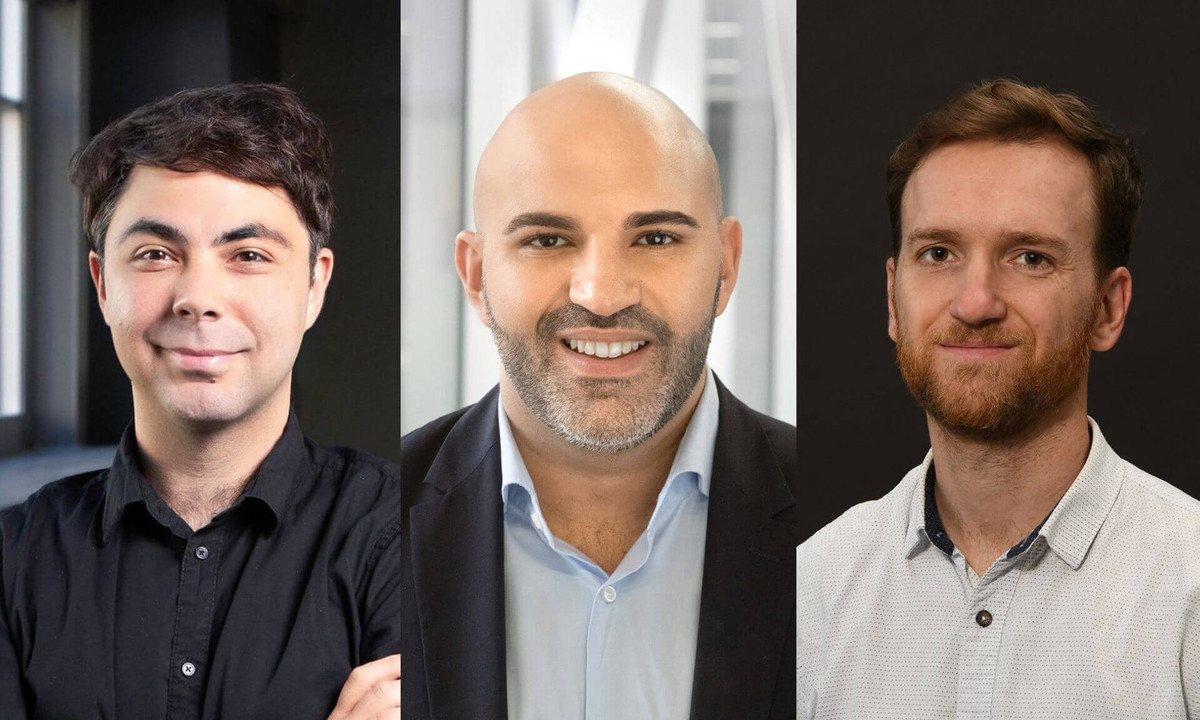
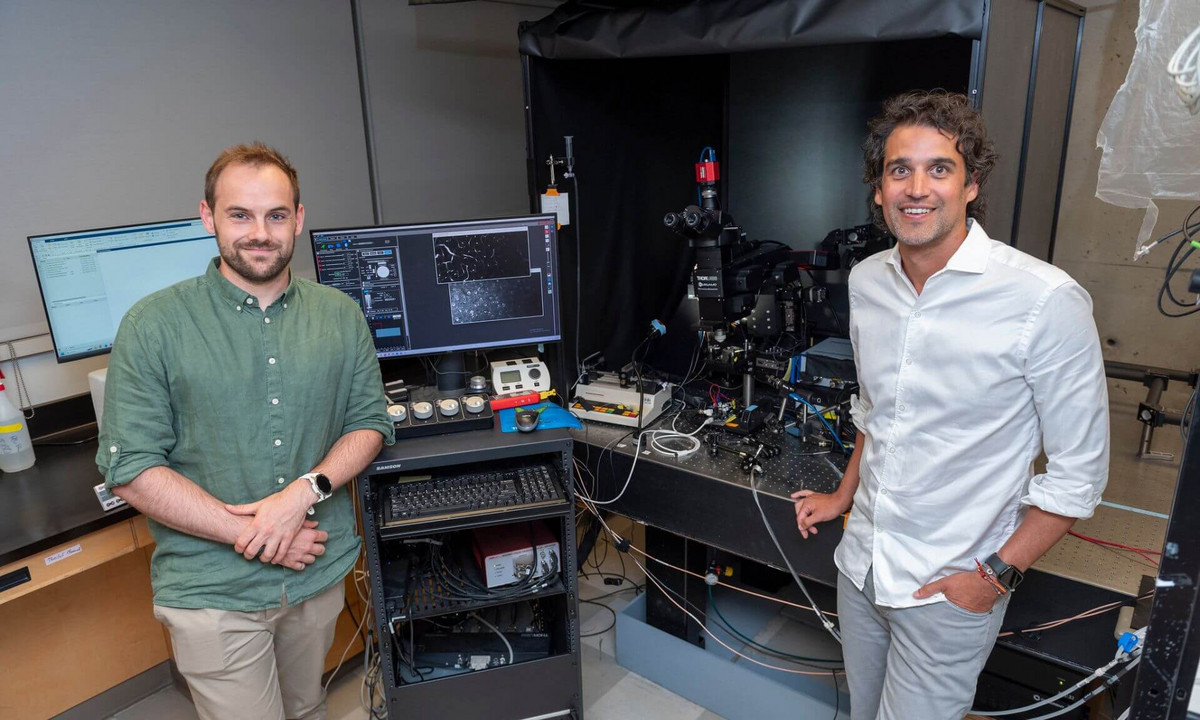
The team from the Functional Neurological Disorders Clinic at CHUM: Dr. Laury Chamelian, neuropsychiatrist; Jasmine Carlier, doctoral student in neuroscience; Dr. Ariane Veilleux-Carpentier, neurologist; Dr. Arline-Aude Bérubé, neurologist; Carolane Desmarteaux, neuropsychologist and researcher; Noé Martineau, neuroscience intern; Kevin Ratté, neuroscience intern; Pierre-Luc Lévesque, physiotherapist; and Dr. Karine Garneau, neurologist.

When your neurological symptoms clearly indicate that your brain is malfunctioning, but routine scans show no underlying structural problem, that's called functional neurological disorder (FND).

Trouble is, not everyone knows to call it that. And because it's so poorly known, people living with the condition have long struggled to be taken seriously, get the right diagnosis and receive appropriate treatment.

Now that’s changing, thanks to a special clinic at the Centre hospitalier de l’Université de Montréal (CHUM), where an interdisciplinary team is treating FND based on the latest scientific model of brain functioning.


'I had to brace myself'

For Meggy Gagliardi, the symptoms first appeared one morning in November 2022: blurred vision, dizziness, numbness in her hands and nausea. The day before, she'd spent four hours using a virtual-reality headset.

She was accustomed to such immersive experiences, so the symptoms were unsettling, to say the least. “I felt like I was on a boat," the 38-year-old young mother recalled. "Walking around, I had to brace myself against the wall."

After three days with no sign of improvement, Gagliardi decided to get checked out. The doctor she saw thought it could be multiple sclerosis or Ménière’s disease. “That really made me and my partner panic,” she said.

The doctor immediately put her on sick leave and told her not to drive. But not long after, Gagliardi passed out and had to be rushed to hospital. The medical staff there were sceptical at first.

“They only checked to see if I had COVID or was pregnant,” she recalled. They suspected migraines with aura or postpartum exhaustion. “But I didn’t feel exhausted and I wasn’t depressed. The symptoms were physical.”

With each passing day, Gagliardi’s condition worsened – and a slew of new and bizarre symptoms appeared. Screens, reading, watching TV, even phoning made her dizzy.

“I couldn’t do normal things anymore; I felt like a prisoner in my own body,” she said. Her children, then aged two and three, couldn’t understand why their mother couldn’t pick them up anymore. 

“I didn’t have the strength or the balance. It was heart-wrenching.”

'You may have ADHD'

About a year later, Gagliardi had what's called a functional seizure, like epileptics get (she wasn't one), and ended up on her living room floor. Her partner called an ambulance.

The next day, the neurologist who had examined her told her, “Your MRI is normal and so are your blood tests. You may have ADHD. Sometimes people with ADHD imagine things.”

Stunned by this diagnosis, the couple decided to go to the CHUM. There, at the hospital's specialized neurology centre, Gagliardi finally received the help she needed. Finally taken seriously, she got a brain scan and an electroencephalogram (EEG).

Two weeks later, she met with neurologist Arline-Aude Bérubé, a clinician at the hospital and assistant clinical professor in the Department of Neuroscience at UdeM’s Faculty of Medicine.

Then came the right diagnosis: functional neurological disorder, or FND.

FND is a disorder of the nervous system that causes a wide range of symptoms, including weakened limbs, difficulty walking, paralysis, tremors, seizures, loss of vision and numbness.

However, routine tests such as scans, EEGs and blood tests show no damage or disease in the brain.

Though long dismissed as an “all-in-your-head” condition, FND is actually a disruption in the functioning of the brain that scrambles communication between it and the rest of  the body.

“I’d actually never heard of it before,” admitted Gagliardi, who was initially shocked but then relieved to learn what she had.

Able to walk again

In just a few weeks, she was able to walk normally again and perform all her usual activities, thanks to a personalized rehabilitation program administered by a physiotherapist trained by Bérubé and her team.*

She was put through a range of physical exercises to “reprogram” her brain: balancing on a half-ball, walking on a balance beam—forward, backward, sideways, eyes open, eyes closed—and moving her head as directed by a laser pointer mounted on her head. 

“It was like training for the Cirque du Soleil!” she said.

Gagliardi also learned to “talk” to her brain and retrain it to send and receive signals, telling it things such as “these signals you’re sending are real, but they’re not the right signals.” 

Her condition improved rapidly. The reason, her doctors told her, was two-fold: a close-knit interdisciplinary team deciding how to proceed, and a new scientific model of brain functioning that de-emphasizes the role of psychological factors.

*To avoid a 9- to 12-month wait at the CHUM, Gagliardi was treated at an external clinic, Physio Logis, by Antoine Deschamps-Laporte.

'It was called hysteria'

“When I did my training in the mid-1990s, FND was seen as a psychological problem caused by unresolved internal conflict,” Bérubé recalled. “It was called conversion disorder, even hysteria.”

That all changed in the 2010s with advances in neuroscience. The brain came to be seen as a statistical inference machine that constantly anticipates sensory signals and adjusts one's perceptions according to its expectations.

This model, which has come to be called the predictive or Bayesian brain model, was officially adopted by the international scientific community in 2017. As a result, FND came to be understood as a malfunctioning of the brain’s predictive system.

“We’ve moved from a strictly psychological model to a metacognitive model,” explained Bérubé. “This means environmental factors and the doctor-patient relationship are decisive factors in treatment.”

Around the same time, physiotherapist Pierre-Luc Lévesque, then at Montreal’s Hôpital Notre-Dame, was seeing puzzling cases of patients suffering from paralysis despite having no brain lesions, and seizures despite having no epileptic brain activity.

"We thought it was due to sensory overload or attention seeking," Lévesque recalled. "But we were wrong. These people were suffering due to real brain issues."

He decided to investigate further and consulted neuropsychiatrist Laury Chamelian. Their discussions led him to a 2013 expert consensus report from the U.K. that recommended physiotherapy to treat FND.

A new clinic is born

In 2017, Lévesque moved over to the CHUM, and there he teamed up with Bérubé and Chamelian to establish the Functional Neurological Disorders Clinic, the first of its kind in Quebec. 

The Clinic’s interdisciplinary team of neurologists, psychiatrists, physiotherapists, occupational therapists and neuropsychologists focuses on restoring function rather than eliminating symptoms.

In 2021, the clinic officially adopted the predictive brain model. The terms “conversion” and “hysteria” are a thing of the past – and the shift is paying off. 

“Now patients have a better understanding of their disorder, accept their diagnosis more readily and in 70 per cent of cases regain normal functioning,” Bérubé said. “Sometimes, just understanding how FND works is enough to trigger improvement.”

For Lévesque, the goal of rehabilitation is to restore the brain’s ability to control the body, guided by medical staff. “I see us as coaches,” he said.

To achieve this, he uses a variety of approaches, such as diverting the patient’s attention away from their symptoms, which helps the body regain its ‘freedom’ and relearn new ways of doing things.

He also works on reprogramming automatic movements and voluntary movements such as walking backwards and throwing a ball.

“We show patients how to control their symptoms," Lévesque said. "Each success builds their confidence. The patient becomes the central actor in their rehabilitation—it’s about giving them agency.”

An addition to the team

A new dimension to the Clinic’s treatment model was added when neuropsychologist Carolane Desmarteaux joined the team. As a researcher, she's interested in metacognition, the awareness and understanding of how one thinks and learns.

Done in collaboration with the Montreal University Institute of Geriatrics' research centre, Desmarteaux's work combines hypnosis, mindfulness and suggestion. 

In particular, she focuses on how a person’s beliefs affect their perceptions of their body. “Someone who thinks they’re trembling all the time ends up convinced they’re trembling,” she explained. 

“Thought perpetuates the symptom.” 

The FND clinic now has nine specialists and many research students – and the “Montreal model” they're developing is beginning to attract attention. 

At a recent international conference in Verona, Italy, the team observed that few clinics are incorporating the predictive brain model as thoroughly as they are.

“We are researching treatments that cure people,” stressed Desmarteaux.


Raising awareness of the disorder

The clinic’s mandate also includes raising awareness and training health professionals in FND. It holds multidisciplinary educational training days, which is where the physiotherapist who treated Meggy Gagliardi learned of the new approach.

Now the team is turning its attention to raising awareness among doctors. Starting in January, Bérubé will give a compulsory three-hour class on FND—the first ever in Quebec—to second-year students at UdeM’s Faculty of Medicine.

Her goal is to teach future doctors to detect FND early and provide patients with effective treatment options. “We need to focus first on training doctors; otherwise it will be the patients teaching the doctors about FND,” she said.

Gagliardi agrees. Now back on her feet, she’s busy on social media getting the word out.

“My brain decided to reprogram itself without my permission – and that can happen to anyone, from one day to the next,” she said. “The good news is that it’s reversible. I’m living proof that it isn’t all in your head and that rehabilitation works.”

Share

Media requests

Université de Montréal
Phone: 514-343-6111, ext. 67960