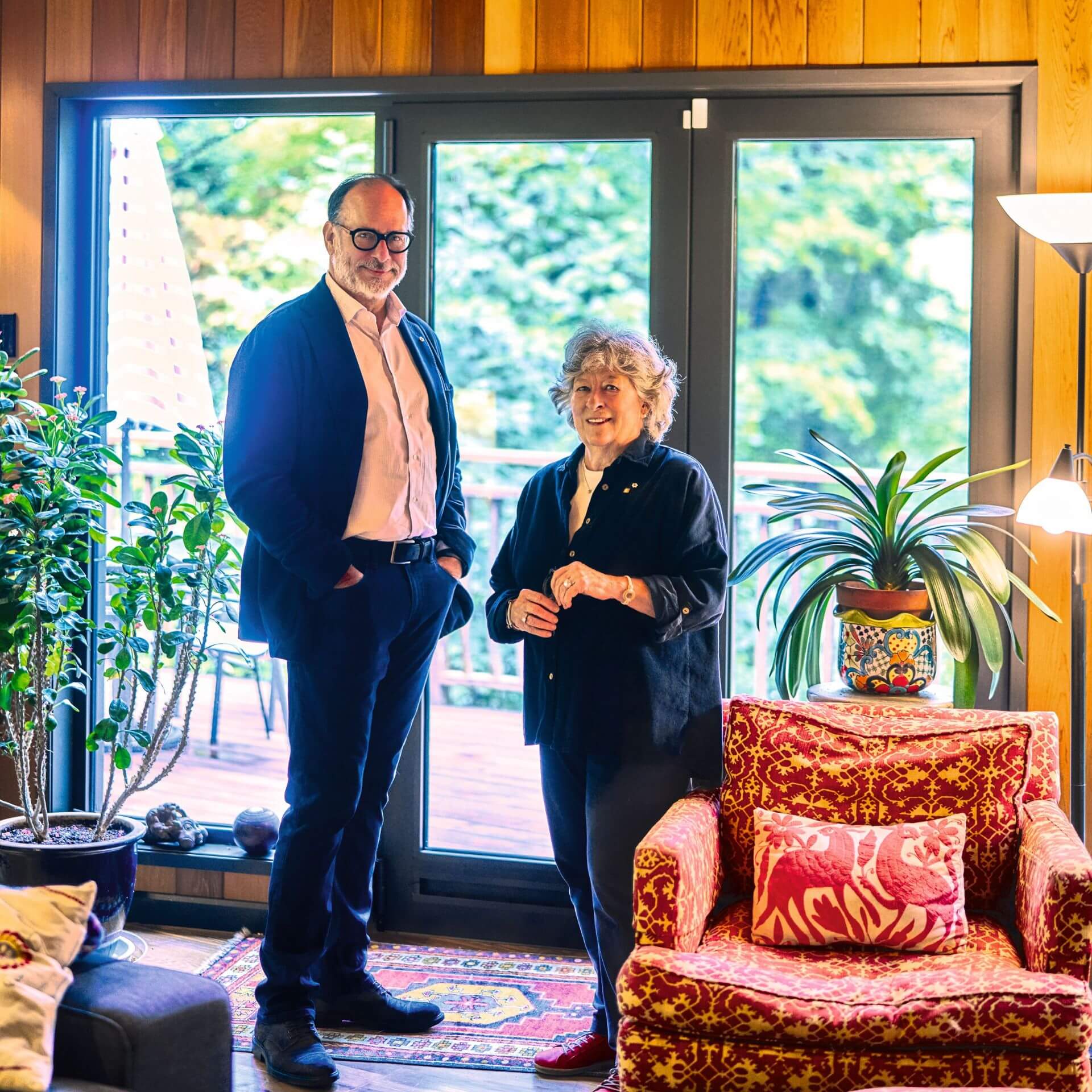
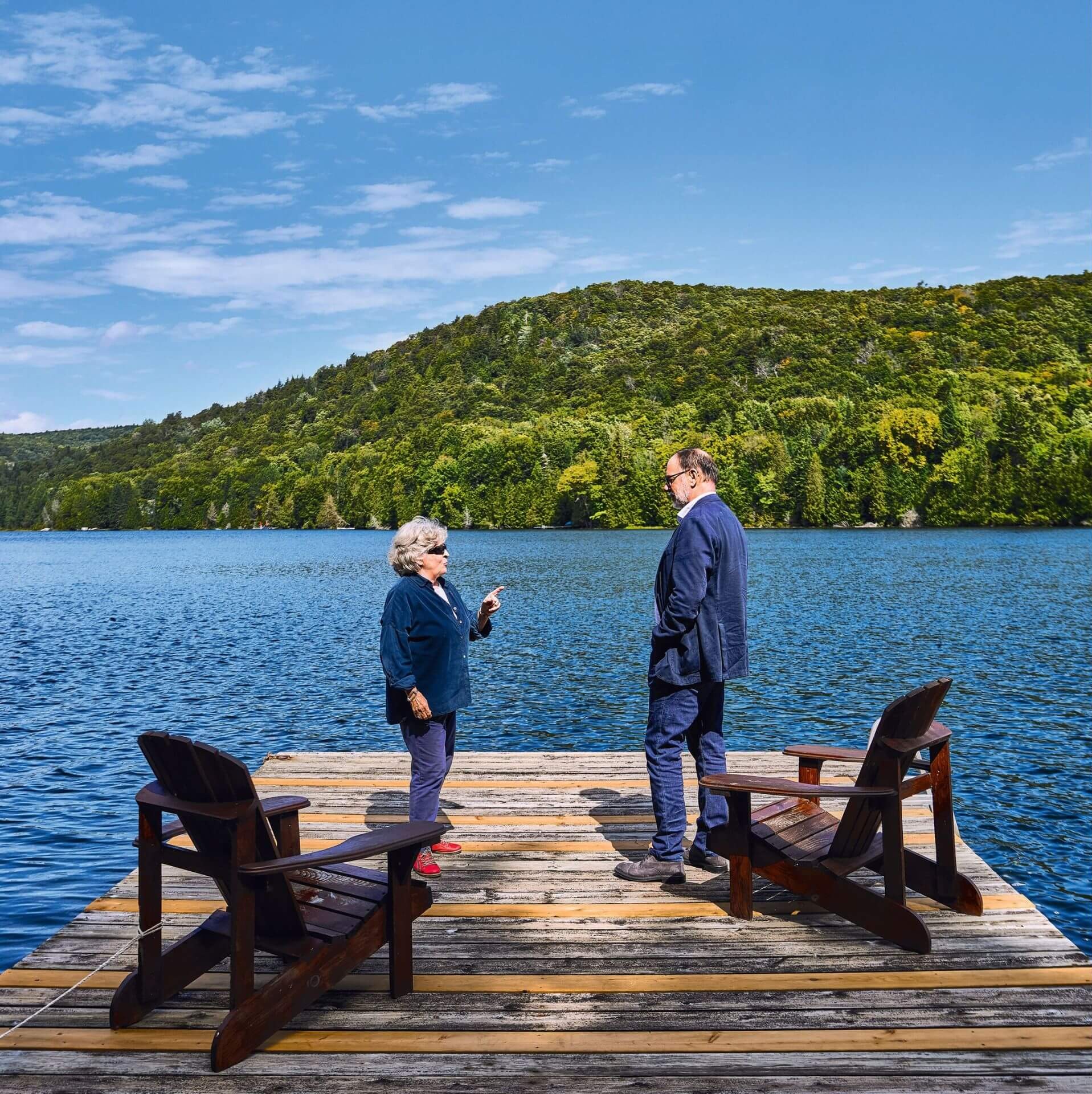
Daniel Jutras: I’d like to back up a bit, because there’s a lot about you I don’t know.
Louise Arbour: I didn’t tell you everything back then.
DJ: Tell me about your time at our Faculty of Law. Did any one professor leave his mark on you?
LA: Yes, Jacques Fortin, who taught criminal law. Ironically, I got my worst grade in his class. At first, I sat at the back, doing crosswords. Over time, he drew me in by linking criminal law to questions of morality and the public interest. After that, I moved up to the second row.
DJ: Did you always see yourself becoming a lawyer?
LA: Not at all. I chose law without knowing what it was. No one in my family was in the profession. My father hoped I’d become a stenographer. In my first year at university, I worked at Expo 67 (the World's Fair, in Montreal) and was far more interested in politics and journalism than in law.
DJ: You worked at Expo?
LA: I applied to be a hostess but didn’t meet the height requirement. I became a switchboard operator, along with the other rejects. We answered visitors’ questions. The problem was that most calls were in English, and I didn’t speak a word of it.
DJ: You spent your youth at Collège Regina Assumpta (in Montreal), which at the time was still a Roman Catholic convent school for girls. What was your family background?
LA: Unconventional. My parents separated when I was 11 or 12, which was rare back then. Before that, we lived in a hotel my father had built in Lacolle (on the U.S. border south of Montreal). He was a larger-than-life figure, politically connected, always scheming. There was a bar in the basement; it wasn’t a place for children. I was sent to Regina Assumpta and returned on weekends. I had my own room at the hotel; it was unusual.
After the separation, I lived in Montreal with my mother and brother. We moved often. We weren’t poor; we just didn’t have money.
DJ: Where does your commitment to social justice come from?
LA: I’ve said I was raised by women—my mother and the Catholic sisters—but that’s only part of it. My attachment to civil liberties goes back to Canada's invoking of the War Measures Act in 1970, during the October Crisis.
It was shocking, as if a Costa-Gavras film were unfolding here at home. That year, I witnessed a police raid near UdeM's Café Campus. The next day, our professor, Jacques Bellemare, challenged us: “Why didn’t you protest? Law isn’t just theoretical.”
DJ: In the mid-1990s, you were a judge on the Ontario Court of Appeal and a mother of three. Then came your posting to (the IRC in) The Hague. Suddenly, you were in the spotlight, seen in Bosnia and Rwanda wearing a bulletproof vest. How did you experience that period?
LA: When I returned to Canada and people recognized me, I was surprised. I hadn’t grasped how visible the role had made me. In the Netherlands, I lived under tight security. Every morning, armed guards drove me in an armoured car.
DJ: What went through your mind when confronting the atrocities of war?
LA: I focused on the work: Was the location in question a primary site? Had bodies been moved? What evidence would stand up in court? But it was hard. Opening mass graves made me nauseous. People say chew gum to block the smell—but then it comes back every time.
In Bosnia, visiting investigators stayed no more than two or three weeks at a time. Beyond that, the emotional toll was too great. I once told one of them: “When you get home and your wife talks about repainting the bathroom, remember—that’s real life. Not Bosnia.”
DJ: Later, after leaving the Supreme Court of Canada, you were appointed UN High Commissioner for Human Rights. Do you remember offering me the role of your chief of staff?
LA: Few people have said no to me.
DJ: It was tempting, but not realistic for a father of young children.
LA: You could have had a remarkable international career. One of my assistants later became South Korea’s foreign affairs minister.
DJ: How do you see today’s geopolitical landscape?
LA: Power is the key word. We’re seeing a more uninhibited exercise of power—not just electoral, but raw power: money, influence, visibility.
This is not a passing moment. It’s a redefinition of power and its limits.
Economic interests are overtaking other concerns. Militarism is regaining legitimacy, even in countries like Canada, Japan and Germany. “First” narratives—America First, Canada First—may seem effective, but most of our major challenges cross borders.
DJ: What gives you hope?
LA: Young people. They have extraordinary tools at their disposal. At 18, with today’s technology, I could have done far more. We underestimate young people. Every generation has transformed the world—and this one will too.