'The older I get, the more restless I am'

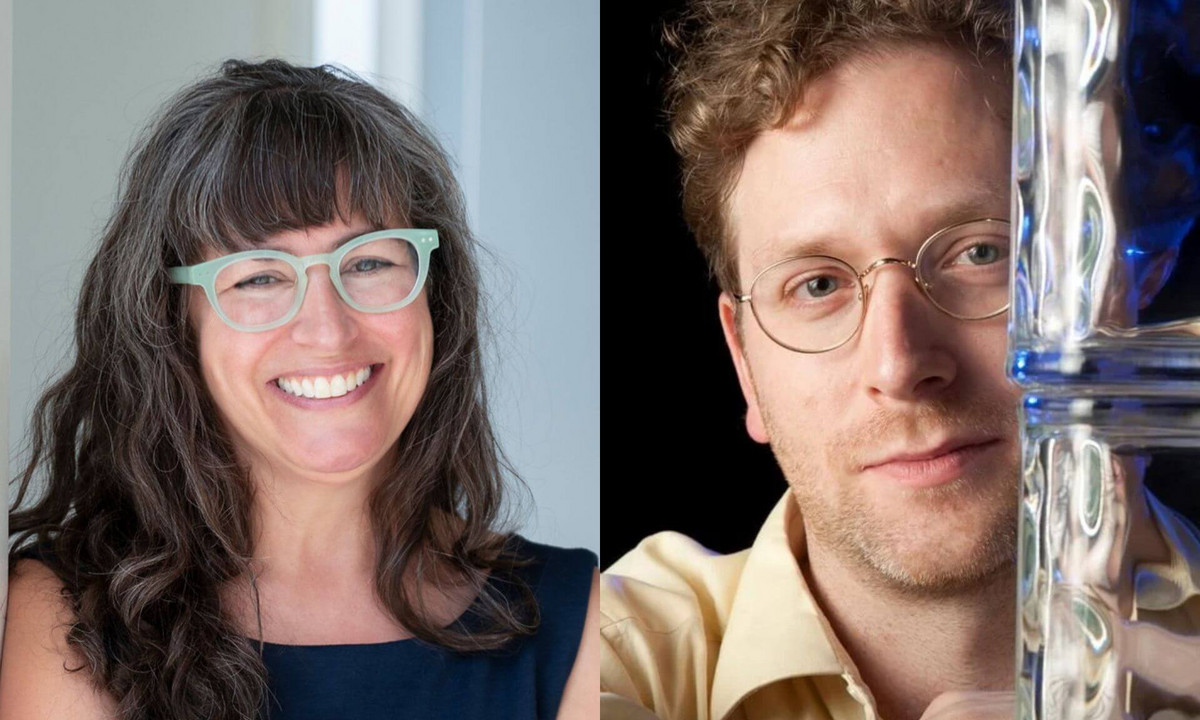
In 5 seconds UdeM ecosystem scientist Oliver Sonnentag has traversed the globe studying the best ways to monitor the effects of climate change on the land – and finding ways to help local people cope.
Local Iban partners receiving introductory drone operation training at the Mendaram peat swamp forest in western Brunei, in November 2025.

Where does Oliver Sonnentag see himself in five years?

"That's a very good question," replied the globetrotting ecosystem scientist, a professor in Université de Montréal's Department of Geography. Just back from a sabbatical at Nanyang Technological University in Singapore, his base for projects and collaborations he's pursuing in Papua New Guinea, Indonesia and Brunei, Sonnentag likes to keep busy. "The older I get, the more restless I am," he said. 

Born and raised in Germany, educated there and in England and Austria before doing his PhD at the University of Toronto and postdoctoral studies at the University of California, Berkeley and Harvard University, Sonnentag was hired at UdeM in 2011 and held the Canada Research Chair in Atmospheric Biogeosciences from 2014 to 2024. Though a frequent traveller to the global South, the 51-year-old specializes in the very different ecosystems of Canada's Northwest.

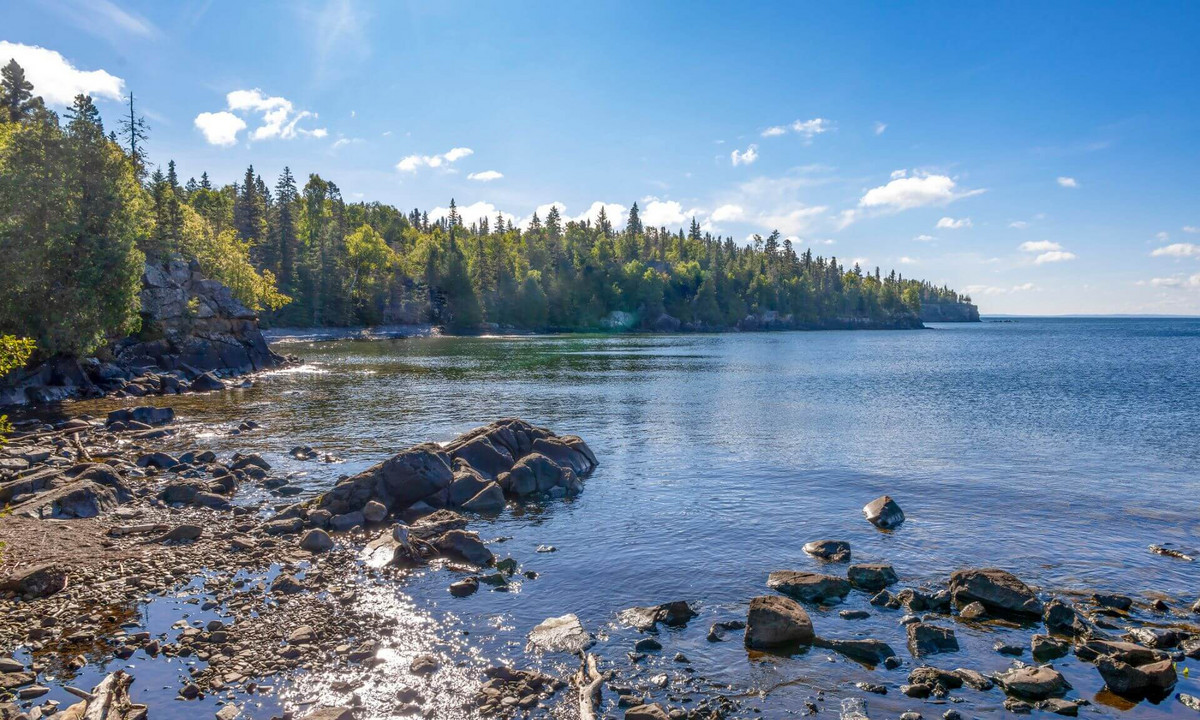
His expertise straddles the tree line: below it, the boreal biome with its forests, wetlands/peatlands and lakes; above it, the Arctic biome with its tundra, wetlands/peatlands and lakes. Through observation and modeling, Sonnentag studies how what happens in those remote regions impacts – and is impacted by – global climate change and the increasing pressures brought by humans on the environment.

A firm believer in community-based research, he works with Indigenous partners in the Northwest Territories to monitor, for example, the consequences of thawing permafrost on exchanges of potent greenhouse gases such as methane – a situation that if left unchecked could transform the land from a "carbon sink," absorbing more carbon dioxide from the atmosphere than it releases, to a carbon emitter.

A special focus on the North

A focus on the North is something Sonnentag developed early in his Canadian adventure.

"I'm a physical scientist, and coming from Germany in the early 2000s, I saw the Canadian wilderness at first as an empty landscape, untouched terrain, a place nobody lived," he recalled. “I went there flush with my federal funding, with all these questions to ask and things to measure. But I quickly realized that no, every square metre there belonged to someone, and I got more and more interested in the people.”

At UdeM, the North became the next frontier in his career.

"Northern latitudes are warming up to four times faster than the rest of the planet, and Indigenous leadership and Indigenous land stewardship are key to the science we do to investigate that," he said. “Western science is great, but it has to be guided by traditional knowledge, because it's the people who live there that know their backyard best. And the first thing you have to figure out as an outsider is how to be on the land.”

It was tough at first.

"Here I was, born and raised in central Europe, someone who worked in the comfort of an office in prestigious institutions, and suddenly it's minus 20 degrees and I'm in the middle of nowhere in the bush," he recalled of those early years. "How do you dress? How do you move? How do you camp out there? How do you find your way around? Without Indigenous support, I knew I'd be dead, so I learned, and learned some more."

Over 50 trips to the North

In all, over the last 14 years Sonnentag has been to the North more than 50 times, sometimes alone, more often accompanied by graduate students, postdocs and other researchers. Together, they've:

  • measured carbon and water dynamics in Arctic and boreal ecosystems;
  • used chambers and micrometeorological techniques such as eddy covariance to investigate methane and carbon dioxide uptake and emissions;
  • relied on Earth observation and artificial intelligence to map compositional and structural changes across forests, peatlands and tundra;
  • and, in collaboration with researchers at the UdeM-affiliated research institute Mila and the UdeM-led consortium IVADO (Institute for Data Valorization), modeled Arctic and boreal ecosystems using a variety of numerical, and more recently, data-driven models.

Every step they've taken, the scientists have kept the locals in mind.

"In the past, the White man would show up with money and bulldozers, plowing his way through the land looking for hydrocarbons to exploit," said Sonnentag. “Now it's scientists from around the world coming in, and instead of extracting natural resources they're extracting data. To whose benefit? Their own, unless they feed that knowledge back to the communities it came from. Tell people how fast the snow is going to melt, and they can plan accordingly.”

As a side project, Sonnentag has been working with Berlin-based illustrator Dominik Heilig and partners from the Liidlii Kue First Nation in Fort Simpson on 'Fire on the Land', a journalistic graphic novel to document some of the work Sonnentag and his team have been doing in the Northwest Territories. To be unveiled in May at the annual Comic Invasion festival, the work-in-progress dramatizes a devasting wildfire in the fall of 2022 that destroyed the remote Scotty Creek Research Station, Canada’s first Indigenous-led research facility; it has since been rebuilt.

Presaging the globe's hottest year on record, the wildfire highlighted the challenge northern Canada faces as a vast territory covered with vulnerable boreal forest, peatland/wetland and lake ecosystems.

To better understand how increasing natural and anthropogenic pressures affect peatland ecosystems here in Quebec, Sonnentag and colleagues at McGill University, Université du Québec à Montréal, Université du Québec à Trois-Rivières, and Université Laval have begun to set up a provincial carbon-flux observational network called CARBONIQUE. Supported by AI software funded by IVADO and developed at Mila, its mission is to use science and technology to better monitor and understand what the climate future holds for Quebec’s — and ultimately, Canada's —ecosystems and society overall.

"Canadian ecosystems — from Arctic tundra, northern peatlands and boreal forests to prairie wetlands, coastal marshes, croplands and urban environments — play a central role in regulating climate,” explained Sonnentag. “Building on the legacy of the Fluxet-Canada Research Project that lasted from 2001 to 2014, as well as CARBONIQUE, we're now working on establishing a next-generation, coordinated national system called CanFlux to track ecosystem–atmosphere exchanges in a context of rapid climate change."

Foreign adventures on sabbatical

The North isn't Sonnentag's only preoccupation. In 2018, on his first sabbatical, he worked in Haiti and southern India, and on his second, this year and last, his stint in Singapore allowed him to travel on a series of adventures in remote parts of Oceania and southeast Asia: four times to the kingdom of Brunei, in northeastern Borneo, where he worked with representatives of the Iban people and colleagues from Nanyang Technology University and Germany's Max Planck Institute for Biogeochemistry; and twice to Papua New Guinea, where he worked with scientists from the University of Exeter in the United Kingdom and members of a clan of the Melpa people.

Off the grid, he found himself knee-deep in the swampy muck of tropical jungles. In Brunei, in one of the region's few peat swamp forests to be spared destruction, he set up instruments on a 65-metre-high flux tower to study changing carbon and water dynamics. In Papua New Guinea, he found inspiration in the work of legendary local trout farmer Betty Higgins, a self-starting entrepreneur and environmentalist he considers “a perfect example of what can be accomplished with sheer willpower.”

"As a physical scientist, I've gotten more and more fascinated by the integration of Western, instrument-based science with place-based local knowledge," Sonnentag said. “It doesn't matter where or who with — First Nations and Inuit communities in boreal and Arctic Canada, or the Iban and Melpa peoples in southeast Asia and Oceania — my research under the most extreme environmental conditions in different parts of the world wouldn't go anywhere without local knowledge that even the most sophisticated instruments can't pick up.”

Through all his travels, he was energized by the variety and urgency of his work.

"Here in Canada or overseas, I like the element of surprise and I like the extremes," he said in March on his return to UdeM’s MIL campus, where he has resumed teaching undergraduate students in geography and other disciplines. “From the Arctic, with all its challenges, to the tropics where your security can't be assured, least of all insured against, I tell myself: 'I can do this.' With good local contacts, you're never really on your own.”

Very active outdoors – running, cross-country skiing, hiking (most recently in the Eastern Himalayas of Bhutan) – Sonnentag has little time for downtime.

"I may be a little hyperactive sometimes, going all around the world, but this is more than a job, it's a passion," he said. "In my experience, the thirst for knowledge never gets quenched.  Certainly, mine hasn't!"

Media requests

Université de Montréal
Phone: 514-343-6111, ext. 75930