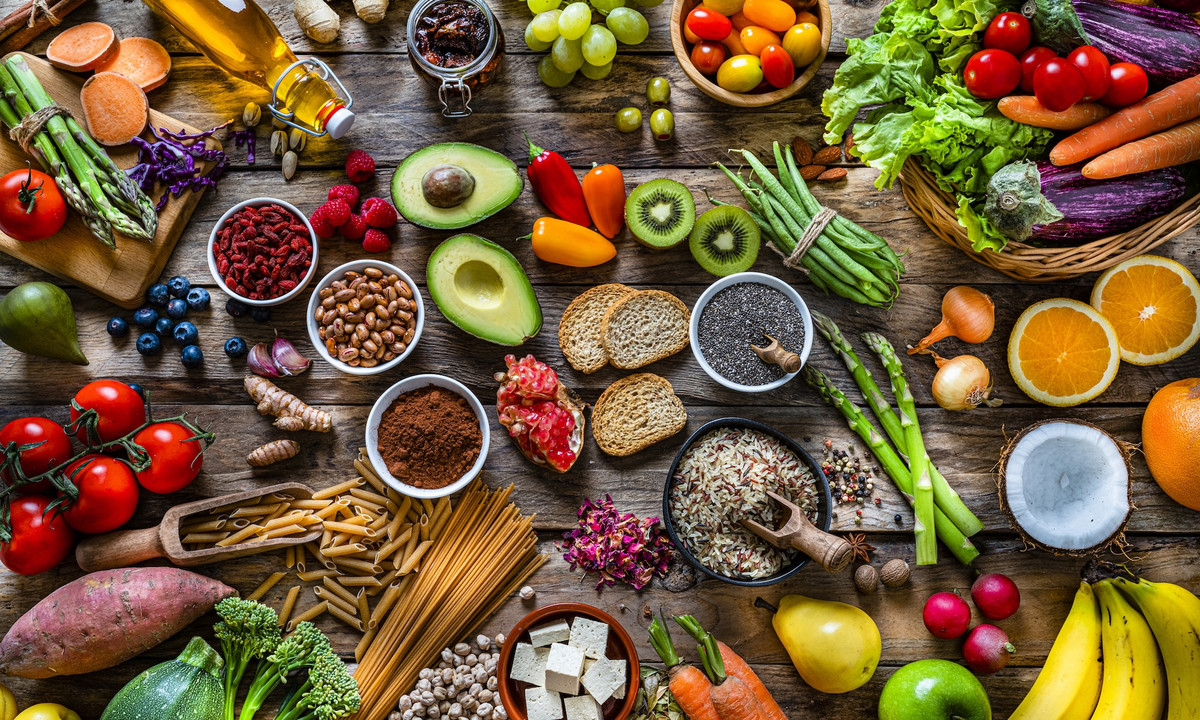
A snapshot of food insecurity among immigrants

In 5 seconds A study of those who use Quebec's food banks challenges two common assumptions: that food insecurity means eating badly, and that the solution is simply getting people to plan, shop and eat better.
The study shows that food insecurity and poor eating habits don’t necessarily go together.

When you hear the term "food insecurity," what do you imagine? Do you equate it with poor dietary practices — in other words, eating badly?  And do you believe the solution is getting people to better plan, shop for and prepare healthy meals?

Those skills are, indeed, key to tackling the problem, and they're at the heart of many community initiatives that seek to empower people living on the edge food-wise by improving their culinary skills.

But the situation may be less straightforward than you think. To wit, a recent Quebec study of immigrants using food banks for the first time found no clear correlation between food insecurity and diet quality, nor any effect of food skills on either.

For these people, food insecurity doesn’t necessarily mean eating poorly, and being a skilled cook doesn't guarantee better nutrition, the researchers found.

224 food-bank users studied

Université de Montréal master's student Sarah Bonin did the study as part of her thesis supervised by Louise Potvin, a professor in UdeM's School of Public Health. They focused on 224 newly registered users at 106 food banks in Montreal.

Bonin used data from Pathways, a longitudinal project that studied why Quebecers use food banks, what they experienced using them, and what impacts they felt on their health and food security.

Coordinated by Federico Roncarolo, Pathways involved community organizations and the Centre for Public Health Research, which is affiliated with Université de Montréal and Quebec’s CIUSSS du Centre-Sud-de-l’Île-de-Montréal.

For her research, Bonin measured people's’ level of food insecurity and the quality of their diet via questionnaires on how often they ate fruits and vegetables and how varied their diet was. Food skills were gauged via questions about meal planning, food supply and food preparation.


Three times a day

Bonin found that participants in her study consumed fruits and vegetables at a median frequency of three times per day and had an average dietary variety score of 16 out of 20. Both of these numbers are higher than the national average for food-secure Canadian adults.

Furthermore, participants’ food skills did not affect their level of food insecurity or diet quality.

However, Bonin cautioned that these findings do not mean that all is well.

“On average, the participants were not consuming the recommended portions of fruits and vegetables,” she said. “Furthermore, the tools we used measured frequency and variety, not the quantity of food consumed. A person may eat vegetables every day, but not enough of them."

And while this study shows that food insecurity and poor eating habits don’t necessarily go together, numerous studies confirm that immigrants are vulnerable to food insecurity.

No single remedy

“What our findings do suggest is that solutions cannot rely solely on individual interventions such as cooking workshops or improving food skills,” Bonin said.

However, she noted that programs focused on culinary skills, such as community kitchens or community gardens, are still useful because they help meet other vital needs such as socialization, positive mental health and a sense of belonging.

More generally, she argues that focusing on food skills as the primary solution is reductive, as food insecurity is first and foremost an issue of family income.

“Another often-overlooked factor concerns the nature of the food distributed through assistance programs,” Bonin added. “What is the quality of this food? Is there enough variety? Do they place enough emphasis on fruits and vegetables, and on culturally acceptable foods?”

Ultimately, the study’s findings are a reminder that food insecurity cannot be reduced to individual choices or a lack of knowledge: it is a complex phenomenon rooted in economic, social and structural issues, Bonin said.

Media requests

Université de Montréal
Phone: 514-343-6111, ext. 75930