Explaining how skin and other tissues stay strong

In 5 seconds Scientists at IRIC have discovered an actin network linking several skin cells that can transmit mechanical forces over long distances.
Squamous epithelial cells under microscope view for education histology.

Scientists at Université de Montréal's Institute for Research in Immunology and Cancer (IRIC) have identified a dynamic structure that forms a network on the surface of epithelial cells.

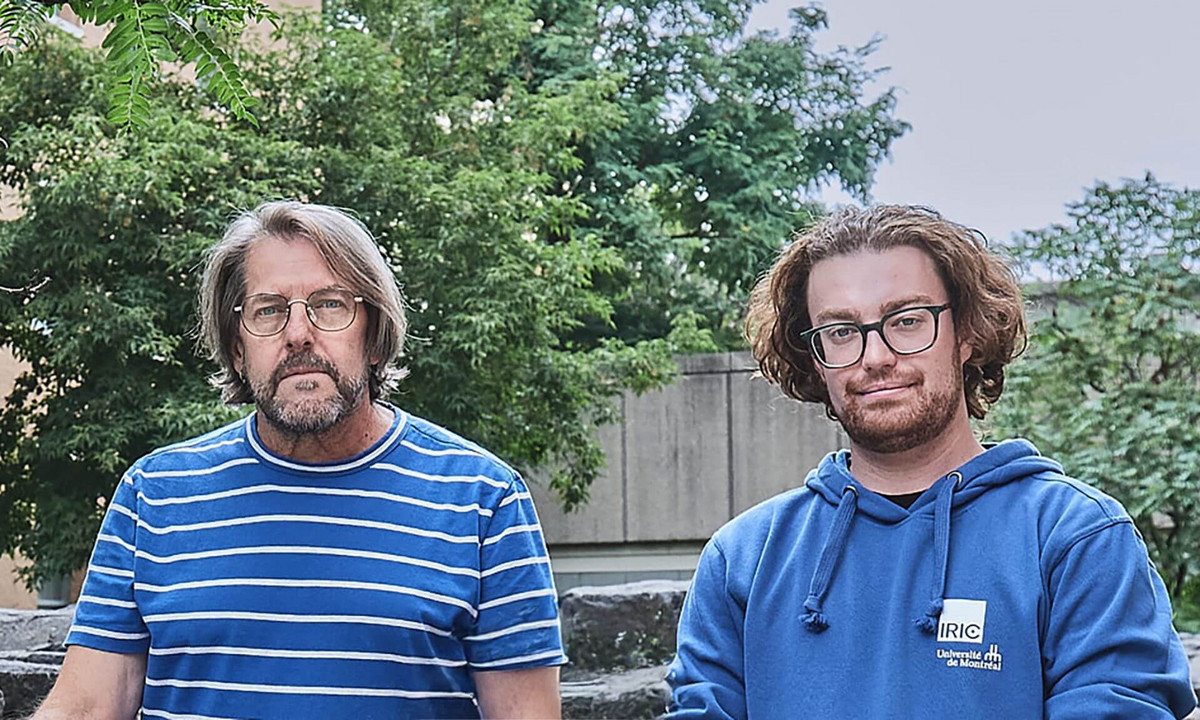
Led by Gregory Emery, director of IRIC’s vesicular trafficking and cell signalling research unit, and PhD students Claire Baudouin and Léa Marpeaux, the work is described in a study published in the Journal of Cell Science. 

It shows that, in certain skin cells, actin fibers can connect with neighboring cells to form a shared network on the surface of the tissue. 

This network appears to act as a collective framework capable of reorganizing as cells move and transmitting mechanical forces from one cell to several others.

The discovery helps explain how epithelial tissues, such as the skin, are able to remain strong, flexible and responsive to movement.

Hubs and cables found

Using microscopy techniques to identify the network of actin filiments, the researchers found it includes star-shaped hubs and long cables connecting dozens of cells to one another.

This so-called supracellular structure can contract and generate tension at the surface of cells. It also remains dynamic and reorganizes as cells migrate collectively.

The findings suggest that this actin network plays a role in transmitting mechanical forces over long distances, up to 14 cells away. The work thus sheds new light on the biomechanical properties of epithelial tissues, the scientists believe.

“These supracellular actin structures could play an essential role in the barrier function performed by these tissues,” said Emery, a professor in UdeM’s Department of Pathology and Cell Biology.

“Studying them could improve our understanding of biological processes such as morphogenesis — that is, the formation of tissues and organs — or wound healing. They also offer a new perspective for exploring certain pathologies that affect epithelia.”

Media requests

Université de Montréal
Phone: 514-343-6111, ext. 75930