In endurance riding, the horses undergo several veterinary checks during the race, Schambourg explained. At each stop, their heart rate must drop below a specific threshold before they are allowed to continue.
This requirement creates an opening for cheating. “Administering low doses of beta-blockers or sedatives can artificially slow the heart rate and allow the horse to pass this crucial check more quickly,” Shambourg explained.
This ruse is difficult to spot because the substances in question are quickly eliminated from the body. By the time a blood sample is taken at the end of the competition, several hours later, they are often undetectable.
To address this, the FEI has developed a new testing strategy. During the competition, a saliva sample is collected from some horses using a device briefly placed in the horse’s mouth. The sample is then presented to a dog trained to detect banned substances by scent. If the dog reacts, a blood sample is taken immediately and can be analyzed while the substance is still detectable.
“The dog doesn’t replace traditional anti-doping testing,” said Schambourg. “Rather, it serves as a screening tool, making it possible to target the most suspicious cases and avoid costly testing of all competitors.”
Masking the pain
Performance-enhancing drugs aren’t the only problem. In some situations, drugs are used to reduce a limb’s sensitivity to pain. An injured horse may then continue to race without showing lameness, potentially worsening an injury to the point of fracture.
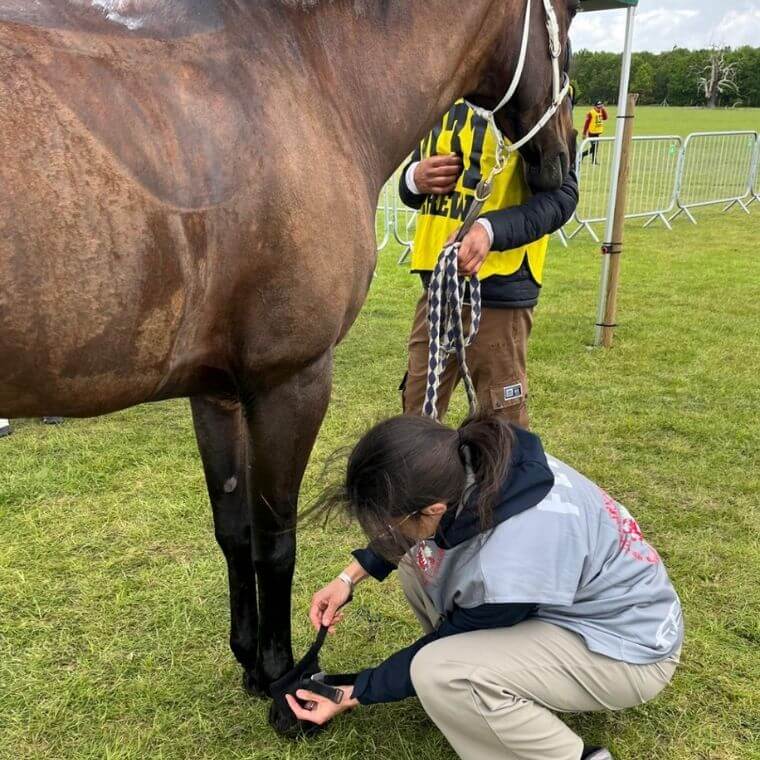
To address this, Schambourg developed a sensitivity test several years ago: pressure is gradually applied to a limb with a specialized device to determine the horse’s reaction point. If sensitivity appears abnormally low, the horse is pulled out of the competition. This test is now part of the FEI’s standard protocol.
“Since the introduction of this sensitivity test, we have seen a significant decrease in the incidence of serious fractures in these competitions,” Schambourg noted. “This may also reflect the test’s deterrent effect; apparently, the increased risk of detection discourages cheating.”