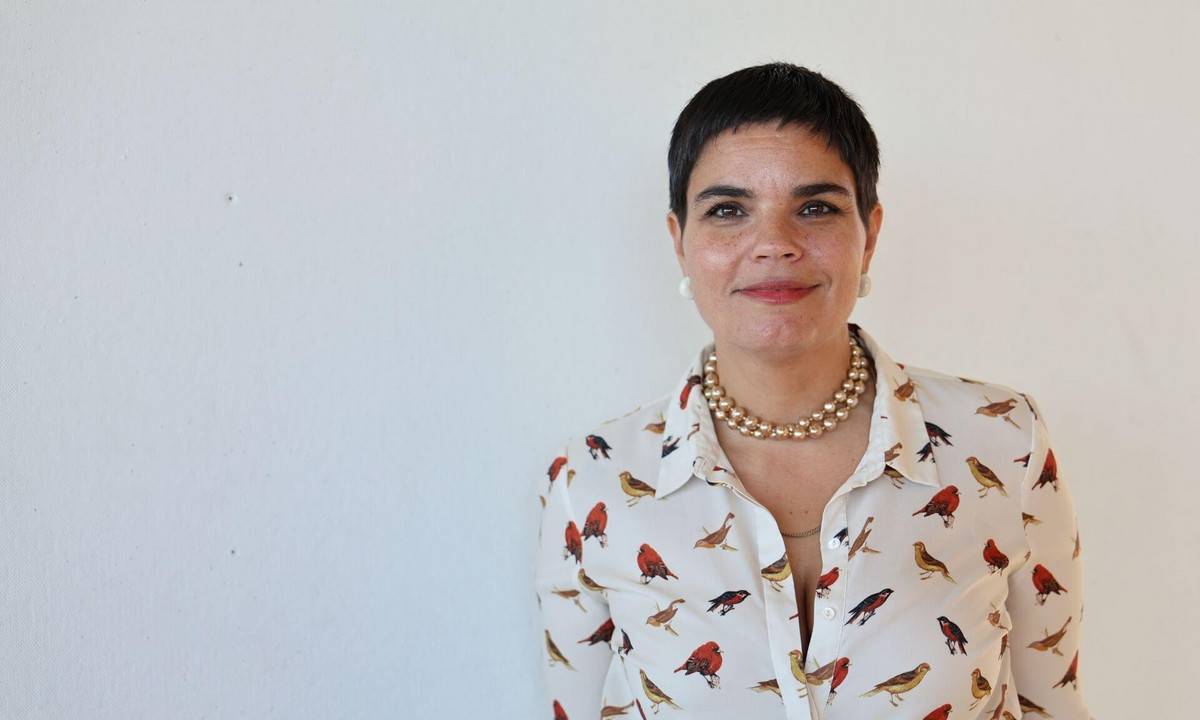
Few people are aware of what really goes behind the doors of psychiatric wards, but Vincent Billé does. He spent 12 years working as a psychiatric nurse in France, primarily in emergency care.
Billé caught the research bug after returning to university to advance his nursing training. He went on to earn two master’s degrees. His work was highly regarded and he was encouraged to pursue a PhD.
“It surprised me because I had never been the best student, or imagined pursuing advanced studies,” he said with a laugh.
Since there was no doctoral program in nursing in France at the time, Billé contacted Marie-Hélène Goulet, a professor in the Faculty of Nursing at Université de Montréal and head of the UdeM-affiliated Centre for the Study of Coercion in Mental Health.
Goulet agreed to supervise his research, along with co-supervisor Pierre Parizeau-Legault at Université du Québec en Outaouais and in partnership with Julie Tansey, a patient who experienced psychiatric coercion firsthand.
So in 2022, at the age of 35, Billé packed his bags and relocated with his husband from Bordeaux to Montreal.
Persuasion and threats
Informal coercion is the subtle, often invisible pressure that staff use to make hospitalized individuals comply and behave in certain ways.
“It’s really common in psychiatric hospitals, although most people aren’t aware of it,” said Billé. “It often takes the form of persuasion or threats—for example, telling someone they won’t be allowed outside for a cigarette if they don’t do what they’re told, or that they’ll be strapped to their bed if they don’t calm down.”
Billé also mentioned coercion that is more structural in nature, such as curfews, locked doors and the removal of personal belongings deemed risky.
“Everything is controlled,” he explained. “There are many rigid rules, which can lead to violations of basic human rights.”
Billé recalls using coercive strategies himself when he worked as a nurse in France. They aren’t motivated by bad intentions, he said, but arise from the prevailing biomedical model of care: “Clinicians often position themselves as experts, an approach tinged with paternalism. They basically believe they know better than the patients what’s good for them.”
Rethinking core assumptions
Billé is immersing himself in the psychiatric community to understand exactly how this informal coercion operates and find more equitable and inclusive alternatives.
For a reality check, he is working with an advisory committee of individuals who have experienced informal coercion, including Tansey. “They will be acknowledged in my publications,” he noted.
Currently, Billé is exploring ways to reduce informal coercion, from greater flexibility and tolerance to rethinking some core assumptions.
“Being a disturbance and being a danger aren’t the same thing,” he said. “I also think that with more resources, it would be possible to offer psychiatric patients more meaningful activities.”
Combining passions
Having never received a scholarship before coming to UdeM, Billé felt gratified and inspired by receiving the Bourse de la Montagne, along with support from the Fonds de recherche du Québec–Santé and other awards.
“It’s a confirmation of the quality of my work and its value to the common good,” said Billé, who hopes to finish his thesis by summer 2027.
Throughout his career, Billé has focused on developing his soft skills: namely, communication, collaboration, management and leadership. “I try to reach out to others, build connections and act with integrity and humility,” he said. “Academic knowledge isn’t everything.”
Billé openly acknowledges his challenges: “I sometimes struggle with time management. Even though I’m well organized, I’m always eager to collaborate with others, which can leave me pressed for time. I’m working on it.”
What comes after his PhD? Billé is exploring opportunities outside academia, though his love of research is leading him to consider a postdoctoral fellowship in the arts, mental health or gender studies.
“I’m a drag artist and activist, and a member of Université de Montréal’s student dance troupe,” he said. “I’m very interested in cultural and artistic practices, so I’m wondering how I could link them to mental health.”